How to Choose the Right I Beam for Your Construction Needs?
Choosing the right I Beam for your construction needs is crucial. I Beam construction plays a vital role in determining the strength and stability of structures. Not all I Beams are created equal, and understanding their types can help you make an informed choice.
Construction practices are diverse, and so are I Beams. Different projects require specific properties from the I Beams used. Factors like load-bearing capacity, material composition, and beam length must be considered. Neglecting these factors can lead to costly mistakes.
It’s important to consult with professionals who understand local building codes and standards. Their expertise can guide you through the selection process. Your choice affects not only the project’s success but also safety. Reflecting on your options might reveal overlooked details. The right I Beam ensures your construction achieves its intended purpose effectively.
Understanding the Basics of I Beams in Construction
I beams, known for their efficient design, play a crucial role in construction. Their shape allows for optimal load distribution. When selecting an I beam, understanding the basics is essential. The width and height affect its structural integrity and weight capacity. A beam that is too small may buckle under pressure, while a beam that is excessively large could add unnecessary weight to your construction.
Consider how the I beam will function in your project. The American Institute of Steel Construction (AISC) provides guidelines on selecting appropriate sizes for different loads. For instance, a standard W8x10 is often used for residential buildings. This means the beam is eight inches tall and weighs ten pounds per foot.
**Tip:** Always calculate the load requirements accurately. Overestimating can lead to cost overruns. Underrating can risk safety issues.
In addition to load capacity, consider the beam’s material. Steel I beams are common due to their strength and durability. However, they can also rust if not properly treated. Engineers recommend using galvanized steel in corrosive environments.
**Tip:** Consult with a structural engineer for expert advice. This ensures you choose the right beam for your specific needs. Having an expert's insight can prevent costly mistakes.
How to Choose the Right I Beam for Your Construction Needs?
| Beam Size (inches) |
Weight per Foot (lbs) |
Material Type |
Typical Application |
Yield Strength (psi) |
| 8 x 10 |
34.4 |
Steel |
Residential beams |
36,000 |
| 10 x 15 |
50.2 |
Steel |
Commercial buildings |
36,000 |
| 12 x 20 |
64.2 |
Steel |
Industrial applications |
36,000 |
| 14 x 22 |
76.8 |
Steel |
Heavy machinery support |
36,000 |
| 16 x 31 |
98.5 |
Steel |
Steel frame construction |
36,000 |
Factors to Consider When Selecting I Beams for Your Project
When selecting I beams for construction, several factors come into play. The primary aspect is load capacity. Each project has unique load requirements. Understanding the weight the beam will support is crucial. Factors like live loads and dead loads must be calculated. Incorrect assumptions can lead to structural failure.
The dimensions of the I beam also matter. Width, height, and thickness all influence performance. For instance, wider beams can distribute weight better. However, they can also add unnecessary weight to the structure. If you’re unsure, consulting with a structural engineer is wise. They can help determine the best fit for your project.
Material choice is another essential factor. Steel is popular due to its strength. However, there are other options like aluminum or composite materials. Each material has its advantages and drawbacks. Cost, durability, and environmental factors should be factored into your decision. Often, the details make the difference between success and failure in construction.
Comparison of I Beam Types Based on Load Capacity
Types of I Beams and Their Applications in Construction
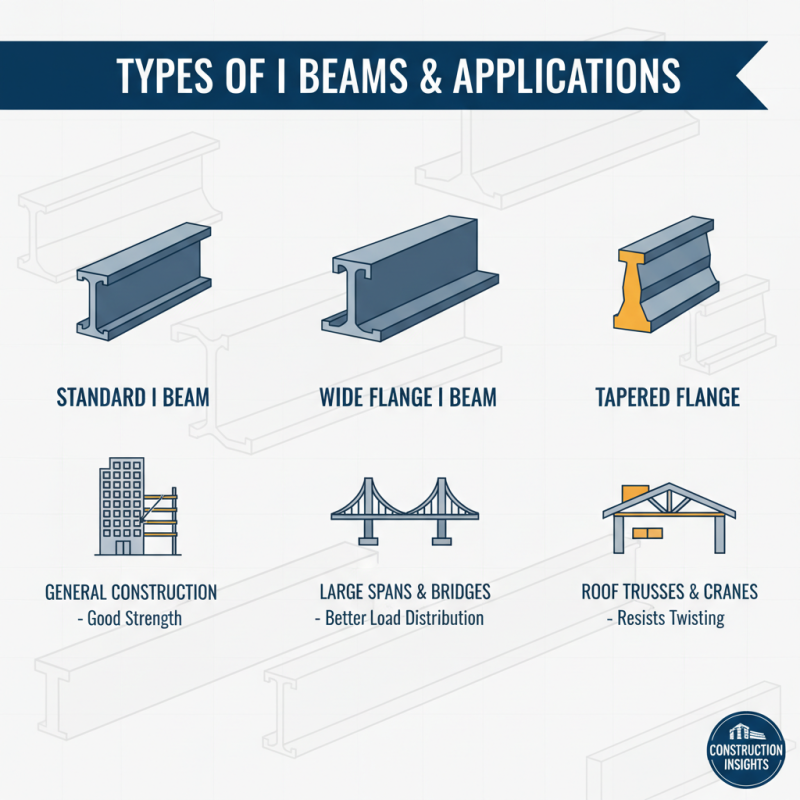
When it comes to construction, choosing the right I beam is essential. Various types of I beams cater to different applications. Some of the most common types include standard I beams, wide flange I beams, and tapered flange I beams. Each type serves a unique purpose. For example, standard I beams offer good strength for many general uses, while wide flange I beams provide better load distribution.
Tips: Always assess the weight load your structure will bear. This assessment helps in selecting the right I beam. It is crucial to consider the design requirements and environmental factors that may affect the beam’s performance. Tapered flange I beams can reduce material usage while maintaining strength, making them an excellent choice for lighter structures.
Choosing the wrong type of I beam can lead to structural issues. Be sure to consult with a structural engineer before making a decision. Small miscalculations can lead to significant problems later. For example, if the wrong beam is used, it might not support the intended loads. These early decisions can impact the entire project. Making informed choices ensures safety and longevity.
Calculating Load Requirements for Your I Beam Selection
When selecting an I beam, understanding load requirements is crucial. Start by determining the total load your structure must support. This includes not just the beam's weight, but also any additional loads, like furniture or equipment. Accurate calculations can prevent structural issues down the line.
Next, consider the span of the I beam. Longer spans require different beam sizes and materials. A beam that is too small may lead to sagging or failure. Measure the distance between supports carefully. Each project is unique, and applying standard guidelines may not fit every scenario.
Finally, don’t overlook factors like beam depth and width. Thicker beams support greater loads, but they also add weight. It’s essential to find a balance. Don’t hesitate to consult with structural engineers. Their expertise can provide insights that might not be immediately apparent. Reflect on your choices often; what works for one project may not work for another.
Common Mistakes to Avoid When Choosing I Beams for Construction
When selecting I beams for construction, avoid common pitfalls. One significant mistake is not calculating load requirements accurately. According to the American Institute of Steel Construction, an estimated 30% of structural failures arise from inadequate load-bearing evaluations. Ensure you understand not just the weight of materials, but also factors like dynamic loads and environmental impacts.
Another frequent error is overlooking beam dimensions. Many builders choose beams based solely on their height. However, the width and flange thickness matter too. An improper dimension can lead to bending or shear failure. Industry reports indicate that these design flaws can contribute to an increase in project costs by up to 20%. It's crucial to consult structural engineers who can provide insights based on real-world data.
Finally, don't underestimate the material specifications. Some may select standard steel without considering the grade or treatment. For instance, using low-grade steel may be tempting due to lower prices. However, it often leads to higher maintenance costs long-term. This decision can have lasting implications on safety and durability. Prioritize expert advice to ensure your selection process is grounded in reliability and proven practices.