2026 How to Choose the Right Square Tube for Your Project?
Choosing the right square tube for your project can significantly impact its success. Square tubes are essential in various industries, such as construction, manufacturing, and automotive. According to a report by the Industry Research Council, the global aluminum square tube market is projected to grow by 5% annually through 2025. This growth showcases the increasing demand for effective materials in projects.
When selecting a square tube, consider factors like material type, weight capacity, and corrosion resistance. Steel, aluminum, and stainless steel are popular options, each with distinct properties. For instance, steel offers high strength but may require more maintenance. Aluminum is lighter and resistant to corrosion, making it suitable for specific applications but less robust than steel.
However, the choice can be overwhelming. Many factors can lead to regret, such as underestimating load requirements or miscalculating project scope. Understanding the specifications of each option is crucial. While there is a wealth of information available, ensuring proper alignment with your project's specific needs can be challenging. Balancing these details can lead to a successful outcome or significant setbacks.

Factors to Consider When Selecting Square Tubes for Your Project
When selecting square tubes for your project, several factors come into play. The dimensions of the tube matter greatly. A tube that is too large may add unnecessary weight. If it's too small, it might not bear the intended load. Always measure your specific needs before making a choice.
Material composition is also vital. Steel provides strength, while aluminum offers a lightweight alternative. Consider the project’s requirements. Will you need corrosion resistance? This can impact your material choice significantly. It’s also important to reflect on the finish. A polished finish can enhance aesthetics but may increase costs.
**Tip:** Always check your load capacity. It’s easy to overlook this detail, but it can determine your project’s success.
Next, think about the availability of the tubes. Sometimes, ideal sizes or materials are not readily accessible. This can lead to delays or cost overruns. By ensuring you have a reliable supplier, you can save time in the long run.
**Tip:** Don’t hesitate to seek expert advice. Consult with someone knowledgeable if you’re unsure. This could prevent costly mistakes in the future.
Understanding Different Materials Used in Square Tubes
When selecting a square tube for your project, understanding the materials is crucial.
Steel is a common choice. It's strong and durable. Carbon steel offers excellent structural strength.
It's often used in construction and heavy-duty applications. However, it can rust without proper protection.
This might lead to unexpected failures over time.
Aluminum is another popular option. It's lightweight and resistant to corrosion.
This makes aluminum ideal for projects where weight is a concern. However, it lacks the same strength as steel.
It can bend under heavy loads.
Consider carefully how the material will perform in your specific use case.
Stainless steel provides a balance of durability and corrosion resistance.
This is valuable in environments exposed to moisture. Still, its higher cost can be a drawback for some projects.
Lastly, plastic square tubes are available, offering flexibility in designs.
They are lightweight but may not support heavy loads effectively. Reflect on these qualities before making your choice.
Evaluating Sizes and Dimensions: What You Need to Know
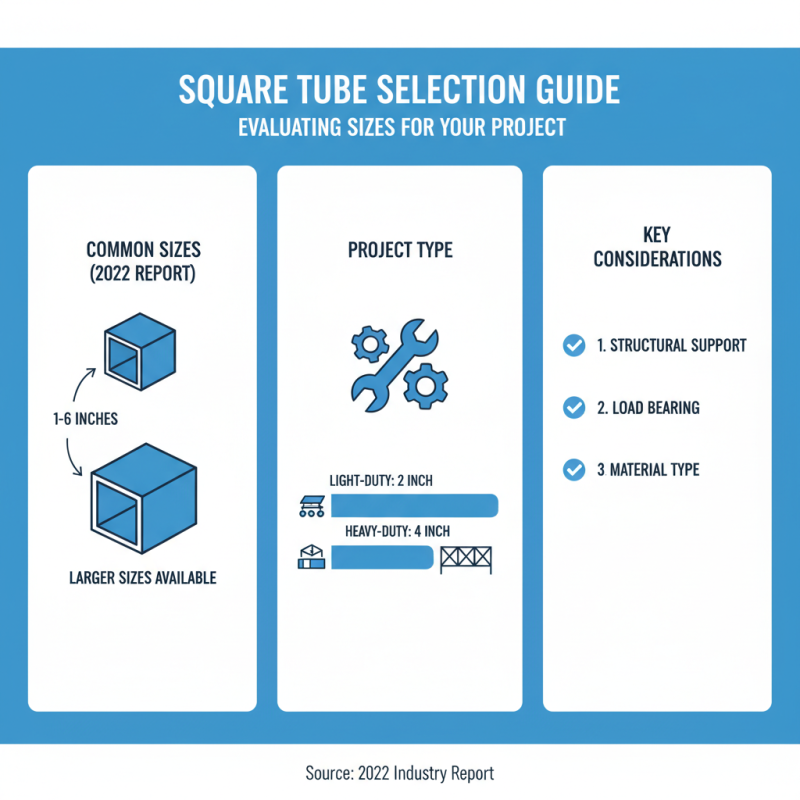
Choosing the right square tube for your project requires careful consideration of size and dimensions. According to a 2022 industry report, the most commonly used sizes for square tubes range from 1 inch to 6 inches, but larger sizes are also available. Understanding your project's specific requirements is crucial. For instance, a 2-inch square tube provides effective structural support for light-duty applications, while a 4-inch size is better for heavy-duty frameworks.
Another critical aspect is wall thickness. A report from the Metal Construction Association indicates that common wall thicknesses are 0.065 inches and 0.083 inches. A thicker wall enhances strength, ideal for industrial projects. However, this can add unnecessary weight and cost for non-structural uses. Balancing strength and weight is essential to ensure project efficiency.
Evaluating the specific weight capacity and load-bearing ability is also crucial. The American Institute of Steel Construction suggests calculating the load requirements based on the intended use. Inadequate size selection can lead to premature failure, necessitating costly adjustments. By prioritizing the right dimensions and wall sizes, you avoid unnecessary challenges and enhance project reliability.
Assessing Load Capacity and Structural Integrity Requirements
When embarking on a project that requires square tubes, assessing load capacity is crucial. Load capacity refers to the weight a tube can safely support without failure. Understand the materials involved. Different materials carry different weights. Steel tubes generally support heavier loads than aluminum. Knowing the specific weight capacity helps in choosing the right tube for structural integrity.
It's also vital to consider the dimensions of the square tube. A larger tube may handle more weight, but does it fit your design? Evaluate the project’s unique needs. If too heavy, it might complicate installation. Think about the environment where the tube will be used. A tube exposed to extreme weather needs to withstand corrosion.
Evaluating structural integrity may bring challenges. Sometimes, standard calculations don’t apply due to unusual conditions. Consulting with a structural engineer can offer insights. Their expertise is invaluable in ensuring safety and durability. Reflect on potential failures. Are you overestimating the tube's strength? A lack of proper evaluation can lead to severe issues down the line. Prioritize meticulous analysis over rushing into choices. This careful approach fosters both reliability and craftsmanship in your project.
2026 How to Choose the Right Square Tube for Your Project? - Assessing Load Capacity and Structural Integrity Requirements
| Material |
Dimensions (inches) |
Wall Thickness (inches) |
Load Capacity (lbs) |
Applications |
| Steel |
2x2 |
0.125 |
2000 |
Structural Frames |
| Aluminum |
1.5x1.5 |
0.125 |
1200 |
Lightweight Structures |
| Stainless Steel |
2x2 |
0.125 |
1800 |
Corrosion-Resistant Applications |
| Mild Steel |
3x3 |
0.25 |
3500 |
Heavy Duty Frames |
| Carbon Steel |
4x4 |
0.5 |
4500 |
Construction Beams |
Cost Considerations and Budgeting for Square Tube Purchases
When budgeting for square tube purchases, understanding costs is crucial. Square tubes come in various materials, including steel, aluminum, and even plastic. Each has unique price points depending on their durability and application. Buy steel if strength is vital and aluminum if weight matters. Consider how each material affects your project's overall cost.
Don’t forget to account for additional expenses. Shipping fees can add up, especially for large orders. Think about how you will store the tubes too, as space may lead to unforeseen costs. Local suppliers might offer better deals than distant ones, saving on transportation. Compare quotes to find the best value while considering quality.
Be mindful of potential waste during your project. Miscalculation can lead to excess material, which is not only wasteful but also impacts your budget. If the project runs over budget, reassess your choices critically. Learn from past experiences, ensuring your next purchase is more efficient. Cost management in square tube projects involves careful planning and reflection.