What are Deformed Steel Bars and Their Uses?
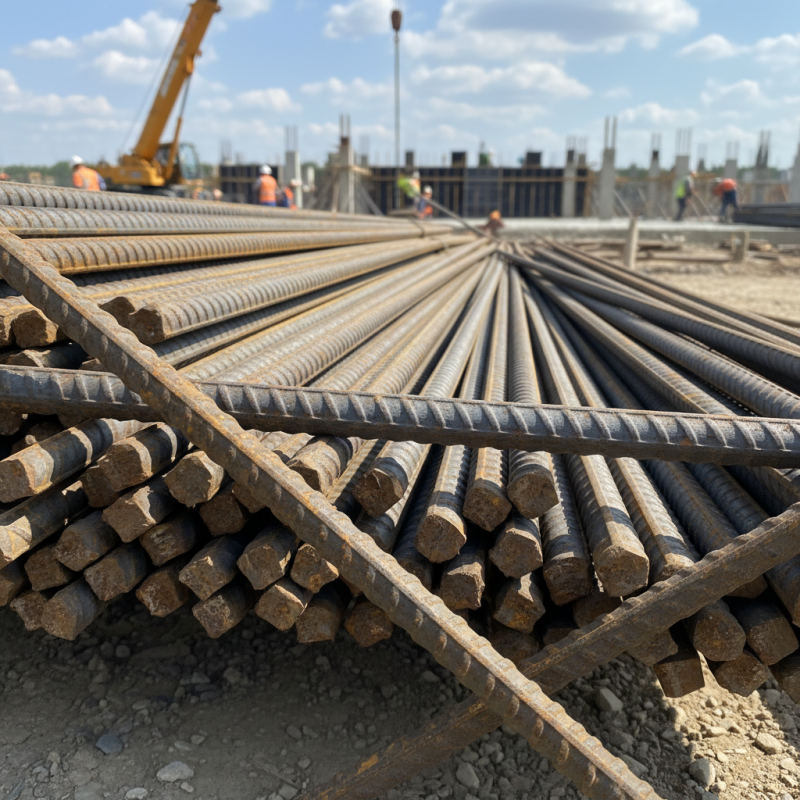
Deformed Steel Bars are essential components in modern construction. They are designed with surface deformations, which enhance bonding with concrete. This unique feature makes them ideal for delivering strength and durability in various structures.
These bars are often used in buildings, bridges, and roads. Their ability to withstand tensile stresses is crucial for maintaining structural integrity. While their benefits are clear, some challenges arise. For instance, the quality of deformed steel bars can vary significantly among manufacturers. It's vital to assess these products carefully before use.
In summary, Deformed Steel Bars play a pivotal role in construction. Understanding their characteristics and applications helps ensure safe and effective structures. However, the quest for quality remains an ongoing concern for builders and engineers alike.
Definition and Composition of Deformed Steel Bars
Deformed steel bars are essential in the construction industry. They have specific ridges or deformations that improve their grip in concrete. This unique feature allows for better bonding, which is crucial in reinforced concrete applications. According to industry reports, deformed bars account for over 60% of the total steel used in construction projects worldwide.
The composition of deformed steel bars generally includes carbon, manganese, and other alloying elements. Typically, carbon content ranges between 0.2% to 0.3%. Manganese enhances strength and toughness. Different grades exist, such as Grade 60, which has a yield strength of 60,000 psi. The presence of deformations increases the tensile and compressive strength of concrete structures, making these bars a reliable choice for builders.
Despite their advantages, some potential drawbacks exist. Manufacturing defects can lead to variances in performance. Quality control is vital to ensure that these bars meet safety standards. Improper bonding with concrete can also lead to structural failure. Awareness of these issues is critical for engineers and construction professionals.
Deformed Steel Bars Usage in Construction
Manufacturing Processes of Deformed Steel Bars
Deformed steel bars, often used in construction, undergo specific manufacturing processes. These bars are essential for reinforcing concrete structures. The process starts with high-quality steel, preferably made from iron ore. The steel is heated and rolled into bars. This initial phase is crucial for ensuring the material's integrity.
Next, the bars are subjected to a series of deformation processes. Techniques like hot rolling impart specific shapes to the bars, enhancing their bonding with concrete. The ribs and indentations formed on the surface improve adhesion. Properly deformed bars provide better tensile strength and resistance to shear. However, not all manufacturers achieve uniformity in deformation, leading to potential inconsistencies.
After deformation, bars may undergo quality checks. Testing involves measuring dimensions and assessing strength. Inspections are not foolproof; sometimes, bars may slip through without adequate scrutiny. While the processes appear straightforward, subtle deviations can impact the structure's overall stability. Awareness of these potential flaws is essential for construction professionals working with deformed steel bars.
Key Mechanical Properties and Standards in Construction
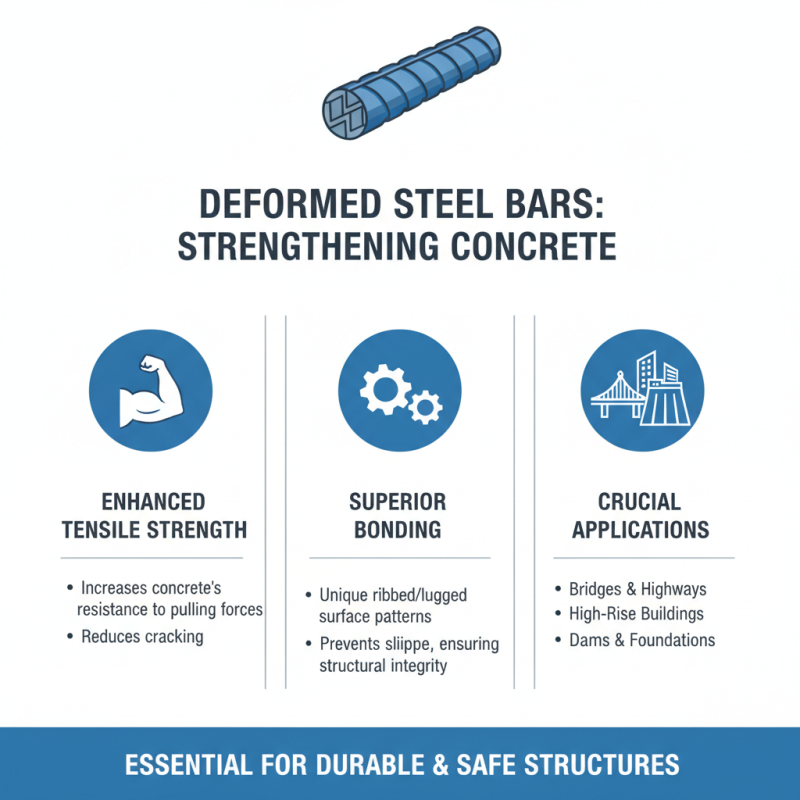
Deformed steel bars are essential in construction. They enhance the tensile strength of concrete structures. Their surface has unique patterns that increase bonding with concrete. This feature is crucial for structural integrity. Often, they are used in bridges, buildings, and dams. However, not all bars are created equal.
Key mechanical properties include yield strength and ductility. Yield strength measures the stress at which deformation begins. Ductility indicates how much a bar can stretch before breaking. Standards like ASTM and BS guide manufacturers in producing quality bars. However, variations in production can lead to inconsistencies. Some bars may not meet these standards. Testing is vital to ensure safety. Engineers must pay close attention to these properties when specifying materials for projects.
Common Applications of Deformed Steel Bars in Reinforcement
Deformed steel bars, often called rebar, play a crucial role in construction. They ensure the structural integrity of concrete by providing support and enhancing its tensile strength. According to the American Concrete Institute, using deformed bars can increase overall resilience, especially in seismic zones.
Common applications of deformed steel bars include highways, bridges, and residential buildings. In bridges, they help redistribute loads efficiently, which is essential for longevity. A study by the National Association of Steel Fabricators suggests that using deformed bars can reduce maintenance costs by 30%. In residential projects, they prevent cracking and warping in concrete, ensuring a longer lifespan for structures.
However, there are challenges. The quality of deformed bars varies across manufacturers. Ensuring compliance with standards is critical but not always guaranteed. Moreover, improper installation may lead to structural failures, highlighting the need for skilled labor. Discrepancies in thickness or rib patterns can also affect performance. Thus, continuous monitoring and evaluation are necessary for successful applications.
Market Trends and Demand for Deformed Steel Bars in Construction
The demand for deformed steel bars in construction continues to rise. According to a recent market report, the global market for deformed steel bars is projected to grow at a compound annual growth rate (CAGR) of over 5% from 2023 to 2028. This growth is primarily driven by urbanization and ongoing infrastructure projects worldwide.
Deformed steel bars are essential in providing structural integrity in concrete structures. Their ridges allow for better bonding with concrete, enhancing strength and durability. The construction of bridges, highways, and high-rise buildings heavily relies on these bars. Notably, Asia-Pacific holds the largest market share, contributing to 40% of global demand, fueled by rapid urban development.
**Tip:** When selecting deformed steel bars, always consider local regulations. Poor material choice can lead to structural failures.
Market trends indicate a shift toward sustainable practices. Increasingly, companies invest in recycled steel materials. This change not only meets regulations but also appeals to environmentally conscious consumers.
**Tip:** Monitor updated specifications for deformed steel bars. Staying informed can help avoid costly errors and project delays.
In conclusion, the market for deformed steel bars is evolving. While opportunities abound, challenges persist. Balancing quality and cost can be complex but essential for successful project completion.
What are Deformed Steel Bars and Their Uses? - Market Trends and Demand for Deformed Steel Bars in Construction
| Dimension |
Grade |
Yield Strength (MPa) |
Applications |
Market Demand (%) |
| 12 mm |
TMT 500 |
500 |
Residential Construction |
30% |
| 16 mm |
TMT 600 |
600 |
Commercial Buildings |
25% |
| 20 mm |
TMT 500 |
500 |
Infrastructure Projects |
20% |
| 25 mm |
TMT 600 |
600 |
High-Rise Buildings |
15% |
| 28 mm |
TMT 650 |
650 |
Bridges and Roads |
10% |