What is Galvanized Square Tube and Its Applications in Construction?
In the realm of construction, the use of materials significantly affects structural integrity and longevity. One such material is the Galvanized Square Tube. This product is made from steel coated with zinc to prevent rusting, making it ideal for various building applications. Its strength and durability are essential for modern constructions, where safety is paramount.
The versatility of the Galvanized Square Tube is noteworthy. It serves multiple roles, from structural support to framing and even in decorative accents. Its lightweight nature simplifies handling, yet it does not compromise strength. However, there are concerns about cost-effectiveness. Sometimes, cheaper alternatives may seem appealing, yet they may not offer the same longevity.
Many construction professionals trust the Galvanized Square Tube for its proven performance. Yet, one must evaluate specific project needs before choosing materials. Understanding the roles, benefits, and limitations of each option is crucial. This ensures that construction projects meet both aesthetic and functional standards.
Definition of Galvanized Square Tube
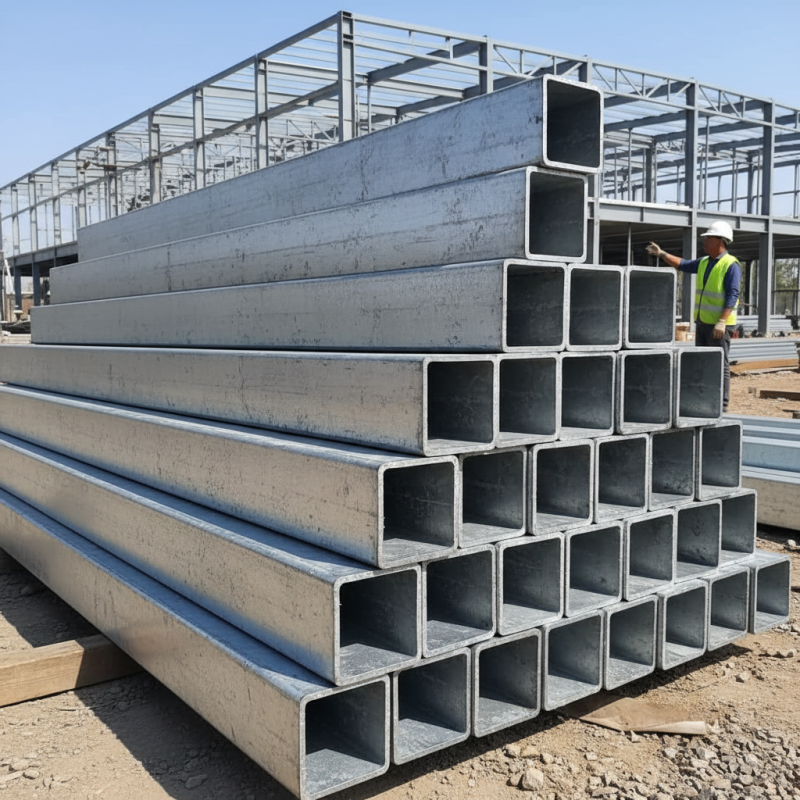
Galvanized square tubes are made from steel that has been coated with zinc. This process protects the steel from corrosion. The result is a strong, durable material ideal for various construction applications. These tubes offer excellent resistance to rust and wear. They are commonly used in frameworks, supports, and as structural components in buildings.
For construction projects, using galvanized square tubes can enhance overall stability. They maintain their structural integrity over time, even in harsh environments. This quality makes them suitable for outdoor structures, such as fences and signposts. Moreover, their uniform shape allows for easy integration into various designs.
**Tip:** Always check the thickness of the zinc coating. A thicker coating offers better protection. Additionally, consider how weather conditions may affect the longevity of the tube. The right choice can significantly impact your project's durability. Planning ahead can prevent costly replacements later.
What is Galvanized Square Tube and Its Applications in Construction?
| Dimension (inches) |
Wall Thickness (mm) |
Weight (lbs/ft) |
Application |
| 1 x 1 |
1.5 |
1.68 |
Structural frames |
| 1.5 x 1.5 |
2.0 |
2.36 |
Handrails |
| 2 x 2 |
2.5 |
3.06 |
Support structures |
| 2.5 x 2.5 |
3.0 |
4.00 |
Frames for heavy equipment |
Manufacturing Process of Galvanized Square Tubes
The manufacturing process of galvanized square tubes begins with high-quality steel. The steel is cut into the desired lengths. These lengths are then shaped into square tubes through welding or bending. Precision is crucial at this stage. The edges must align perfectly to ensure structural integrity.
Next, the tubes undergo the galvanization process. This involves coating them with a layer of zinc. The zinc protects the steel from rust and corrosion. The most common method is hot-dip galvanization. In this process, the tubes are submerged in molten zinc. This creates a strong, protective barrier. However, the immersion must be handled carefully to prevent imperfections.
After galvanization, the tubes are inspected for quality. Any defects can compromise their strength. It's essential to catch these flaws early. Occasionally, there are issues like uneven coating or surface blemishes. Addressing these can be challenging but is necessary for reliability. Proper quality control ensures that the final product meets industry standards. This meticulous attention to detail defines the construction industry's trust in galvanized square tubes.
Properties and Advantages of Galvanized Square Tubes
Galvanized square tubes are a popular choice in construction due to their unique properties and advantages. The tubes undergo a hot-dip galvanization process, which coats the steel with a layer of zinc. This layer protects the steel from corrosion, making the tubes highly durable. They withstand harsh weather conditions, moisture, and other environmental factors. This durability ensures long-lasting performance in various construction applications.
One notable advantage of galvanized square tubes is their strength-to-weight ratio. They provide excellent structural support while remaining lightweight. This feature makes them easy to handle during installation, reducing labor costs. Additionally, their uniform shape and size allow for precise measurements and seamless integration into construction projects. However, some may find that welding galvanized steel poses challenges due to the zinc coating. Proper techniques are required to ensure strong welds, which can be a learning curve for some contractors.
In residential, commercial, and industrial construction, galvanized square tubes find diverse applications. They are commonly used in frameworks, railings, and support structures. Their aesthetic appeal also makes them favorable for visible architectural elements. While they offer numerous benefits, it’s essential to consider the specific requirements of each project. Understanding these properties can help maximize the advantages of galvanized square tubes in construction.
Galvanized Square Tubes: Properties and Advantages
This bar chart illustrates the properties rating of galvanized square tubes based on essential criteria such as corrosion resistance, strength, weight, cost-effectiveness, and workability. Each property is rated on a scale of 1 to 10, showcasing the advantages of using galvanized square tubes in construction.
Common Applications in Construction and Infrastructure
Galvanized square tubes are essential in construction and infrastructure projects. They provide strength, durability, and resistance to corrosion. With the zinc coating, these tubes can withstand outdoor conditions, making them ideal for various building applications. According to industry reports, the demand for galvanized steel in construction has increased by 15% over the past five years, highlighting its importance.
In infrastructure, galvanized square tubes serve several critical roles. They are often used in the framework of buildings, bridges, and towers. Their robust nature can support heavy loads, which is crucial for safety and longevity. Federal and state construction projects now commonly specify galvanized materials, emphasizing their reliability.
Tips: Always assess the site conditions before selection. Corrosion potential may vary based on local environments. Regular inspections can help identify any issues early on. Understanding the load-bearing capacity is vital for structural integrity.
Comparative Analysis with Other Materials in Construction
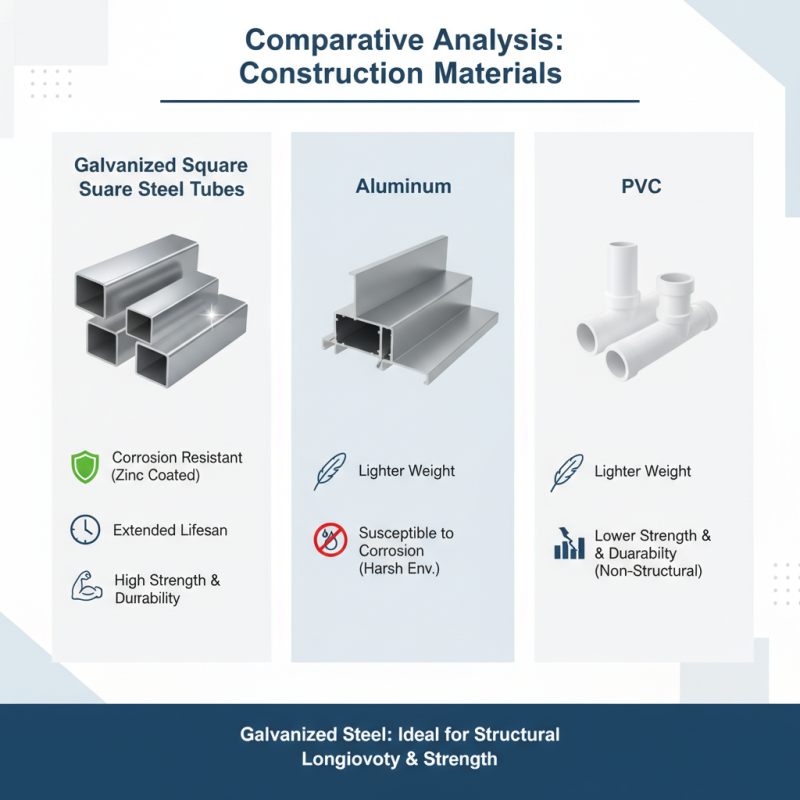
Galvanized square tubes have gained popularity in construction due to their unique properties. They are made from steel and coated with zinc to prevent corrosion. This process extends the lifespan of the material, making it suitable for various construction applications. In contrast, aluminum and PVC are lighter but offer different strengths and weaknesses. Aluminum might corrode over time, especially in harsh environments. PVC is not as strong or durable as galvanized steel, particularly for structural needs.
When comparing galvanized square tubes to other materials, it is essential to consider strength and weight. Galvanized steel is robust, providing good load-bearing capabilities. It can withstand considerable stress, making it ideal for beams, frames, and supports. On the other hand, while wood offers aesthetic appeal, it is susceptible to rot and pests. This could lead to vulnerabilities in structures over time. However, some may find galvanized tubes less aesthetically pleasing for certain architectural designs.
Reflecting on these materials shows that each has its merits and downsides. The choice between galvanized square tubes, aluminum, and wood should depend on specific project requirements. Environment, cost, and desired longevity all play critical roles in decision-making. Understanding these factors can lead to better construction practices and outcomes.