Square Tube Design Tips for Your Next Project?
When designing projects that involve structural components, Square Tube material stands out as a versatile choice. According to the American Institute of Steel Construction, square tubing offers enhanced structural integrity and durability. With its uniform shape, it provides uniform support across various applications, ensuring stability.
The market for square tubing is growing. Research shows that the global steel tubing market is expected to reach $100 billion by 2025. This trend indicates a rising demand for innovative designs. However, choosing the right dimensions, wall thickness, and alloy can be challenging. Designers must consider both aesthetic and functional aspects. Mistakes in these areas can lead to structural failures or increased costs.
One common issue arises from overlooking weight considerations. A tube that is too heavy may affect overall project feasibility. Designers should carefully analyze load-bearing capacities and explore lightweight alternatives. In some cases, not all designs work seamlessly with square tubes. It’s essential to reevaluate and adapt when initial concepts do not meet expectations. Adjustments can lead to better performance and results that resonate with project goals.
Understanding the Structural Advantages of Square Tubes in Design
Square tubes offer unique structural advantages that enhance the integrity of various designs. Their uniform shape allows efficient stress distribution across all sides. This characteristic makes them ideal for both load-bearing and aesthetic applications. When properly utilized, square tubes can create strong frameworks for furniture, buildings, and other structures, optimizing not only strength but also visual appeal.
One potential drawback can arise if the dimensions are not calculated correctly. Poorly sized tubes can lead to weaknesses, undermining their benefits. Designers should pay close attention to weight limits and intended use during the selection process. Additionally, incorporating square tubes with other materials might pose challenges. Compatibility issues can affect overall stability.
Nevertheless, when square tubes are thoughtfully integrated into a project, the payoff can be significant. They provide a modern look while ensuring durability. Emphasizing both form and function will lead to successful outcomes. Reflecting on the design choices is essential for achieving the best results.
Key Considerations for Choosing Materials in Square Tube Applications
When selecting materials for square tube applications, multiple factors come into play. The choice of material often impacts both functionality and longevity. Common materials include aluminum, stainless steel, and carbon steel. Aluminum is lightweight and resistant to corrosion. However, it may not be as strong in high-stress environments. Stainless steel offers durability and aesthetic appeal but can be more expensive. Carbon steel is often strong and suitable for a variety of projects, yet it is prone to rust without proper treatment.
Consider the specific demands of your project. Will the square tube be exposed to harsh weather or chemicals? If so, corrosion resistance should be a priority. Think about weight considerations too. A heavier material might affect the overall design and usability. Each choice comes with a trade-off, demanding careful thought and planning.
Innovative designs can emerge from material constraints. However, don’t overlook potential flaws in your design process. For instance, not accounting for weight can lead to structural failures. Testing prototypes can help identify weaknesses early on. Reflect on the implications of each material choice. A well-considered decision today can prevent costly mistakes later.
Material Considerations for Square Tube Applications
Optimal Dimensions and Wall Thickness for Load-Bearing Square Tubes
When designing load-bearing square tubes, optimal dimensions are crucial. The height and width should match the intended application. For instance, larger tubes can support more weight but may add unnecessary bulk. A tube with a side length of 2 to 4 inches often strikes a balance. This size provides strength while remaining manageable.
Wall thickness is another important factor. Thicker walls offer increased strength but also add weight. A wall thickness of 1/8 inch is often a good start for many projects. However, thicker walls may be necessary for heavier loads. It’s important to assess the project's requirements carefully. Oversizing can lead to higher costs and challenges during assembly.
Material choice also plays a role in the design process. Different metals have unique properties that affect performance. For example, aluminum is lightweight and resistant to corrosion, while steel is strong and durable. Choosing the right material can enhance the overall structure, but may also require trade-offs. Reflecting on these aspects can lead to better design outcomes.
Square Tube Design Tips for Your Next Project
| Dimension (inches) |
Wall Thickness (inches) |
Maximum Load Capacity (lbs) |
Applications |
| 2 x 2 |
0.125 |
1,500 |
Structural frames, furniture |
| 3 x 3 |
0.187 |
2,000 |
Heavy-duty supports, railings |
| 4 x 4 |
0.250 |
3,200 |
Industrial frames, construction |
| 5 x 5 |
0.312 |
4,500 |
High-load applications, trailers |
| 6 x 6 |
0.375 |
5,600 |
Large structures, scaffolding |
Fabrication Techniques: Welding vs. Fastening in Square Tube Projects
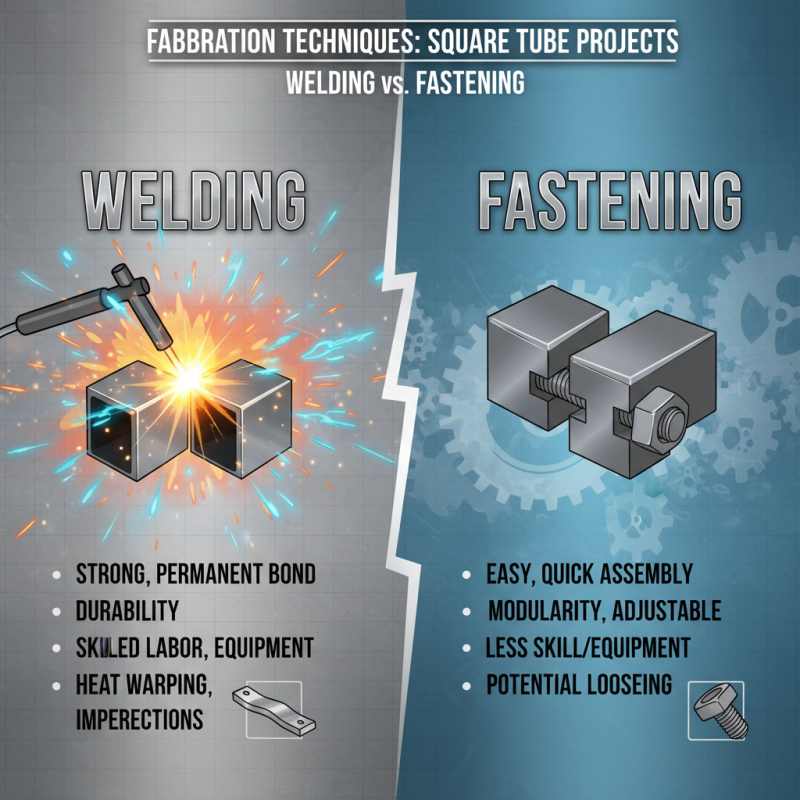
When working on square tube projects, choosing between welding and fastening can be challenging. Welding offers a strong, permanent bond. It’s ideal for structures requiring durability. However, it needs skilled labor and specialized equipment. The heat can warp the metal, leading to imperfections. It's crucial to consider these factors.
On the other hand, fastening methods like bolts and screws are often easier. They don't require extensive training. Fastenings can be adjusted or removed if needed. However, they might not provide the same strength as welded joints. There can be misalignment issues due to tolerances. This may result in weak spots that compromise the project.
Each method has its place in square tube design. It’s essential to weigh the pros and cons of each technique. Experimentation can lead to unexpected results. Remember, the goal is functional aesthetics. Taking time to reflect on material choices can lead to better outcomes.
Common Mistakes to Avoid When Designing with Square Tubes
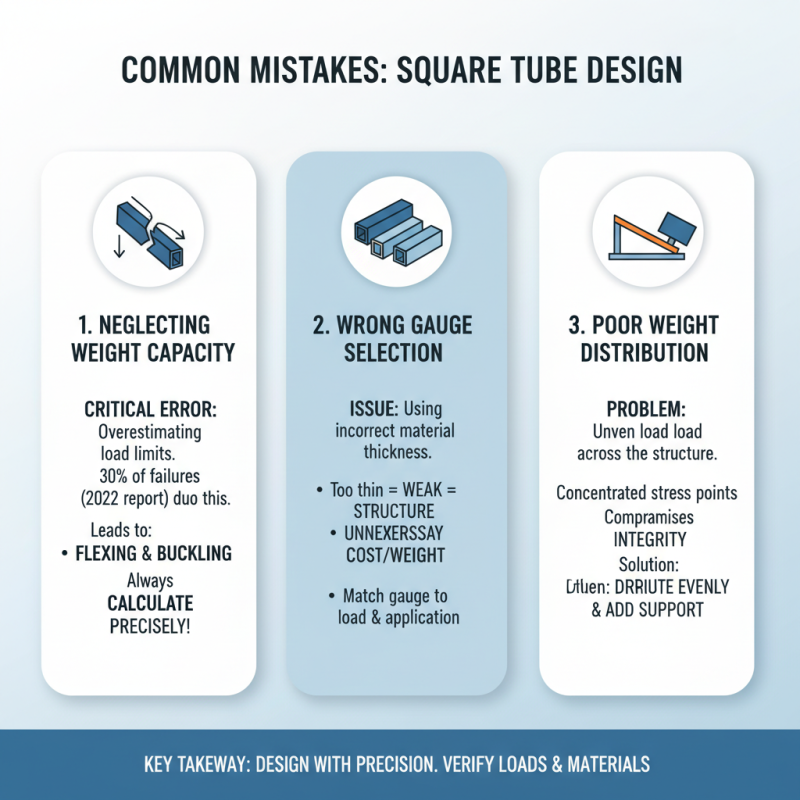
When designing with square tubes, several common mistakes can derail your project. One significant error is neglecting the weight capacity. According to a 2022 industry report, 30% of structural failures are linked to overestimating load-bearing limits. Using the wrong gauge can lead to unexpected flexing or buckling. Engineers often miscalculate the weight distribution, compromising the entire structure.
Another mistake involves poor joint design. Weak or poorly aligned joints can severely weaken the overall integrity. A study by the American Institute of Steel Construction revealed that over 25% of structural issues stem from inadequate joint connections. This can be easily overlooked in initial designs, leading to costly repairs later. Attention to detail is crucial, especially when crafting joints that involve welding or bolting.
Finally, not considering corrosion resistance can shorten the lifespan of your project. In environments exposed to moisture, corrosion can compromise structural stability. According to industry guidelines, selecting the right protective coating or choosing stainless steel can extend longevity. Skipping this step in the design phase might save time initially, but it can result in higher maintenance costs down the line. Quality over speed is essential in square tube design.