What Are the Different Types of Steel Wire and Their Uses?
Steel Wire is a critical component in various industries, known for its strength and versatility. According to the World Steel Association, the global steel wire market is expected to reach USD 40 billion by 2025. This growth underscores the importance of understanding different types of steel wire and their applications.
John Smith, an industry expert and author of "Steel Wire Fundamentals," emphasizes this point: "Choosing the right type of steel wire can significantly influence project outcomes." This insight reflects industry trends that prioritize selecting appropriate steel wire types, from high-carbon wire used in construction to low-carbon variants for manufacturing and general use.
The demand for specialized steel wire continues to rise. Factors such as construction, automotive, and telecommunications rely heavily on steel wire for durability and efficiency. It's essential to acknowledge that while the market is booming, some users may overlook critical specifications for their projects, leading to potential inefficiencies. Understanding the nuances of steel wire types is vital for success in construction and engineering.
Types of Steel Wire: An Overview of Material Properties
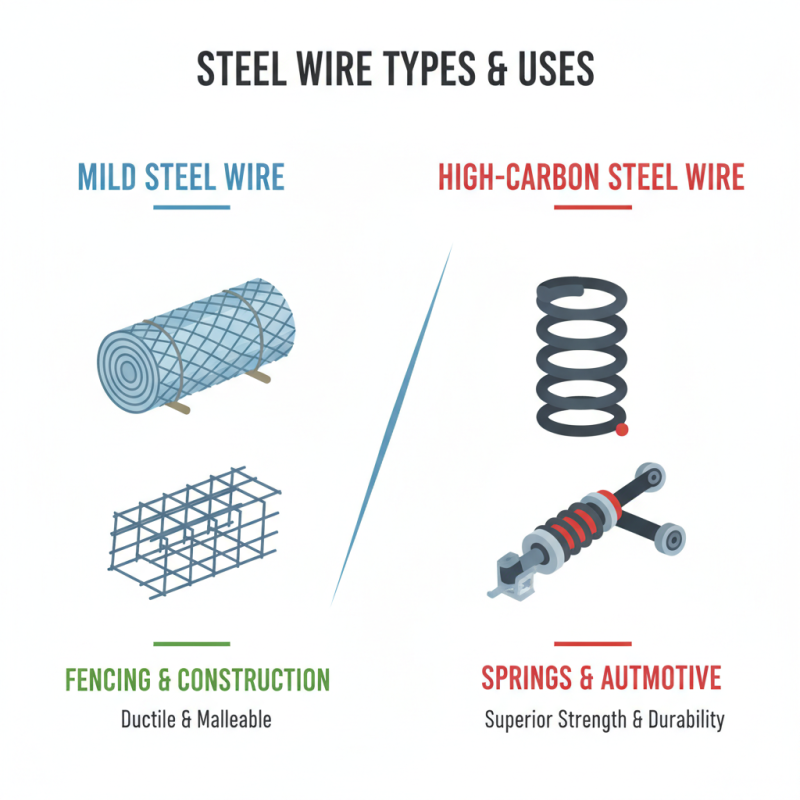
Steel wire comes in various types, each with distinct properties suited for different applications. For instance, mild steel wire is commonly used for fencing and construction. It is ductile and malleable, making it easy to work with. On the other hand, high-carbon steel wire offers superior strength. This makes it ideal for products that require rigidity and durability, such as springs and automotive components.
Stainless steel wire is yet another important type. It resists corrosion and oxidation, which is essential for industries like food processing and medical devices. The smooth surface finish of stainless steel wire often enhances its aesthetic appeal. However, one must consider its higher cost compared to other types of steel wire.
Each wire type has its trade-offs. For example, while high-carbon steel is strong, it can be brittle if not tempered properly. Mild steel, while versatile, lacks the strength required for heavy-duty applications. Understanding these characteristics is crucial in making informed choices about wire selection. The landscape of steel wire is complex and requires careful consideration of material properties and intended uses.
Applications of Mild Steel Wire in Construction and Manufacturing
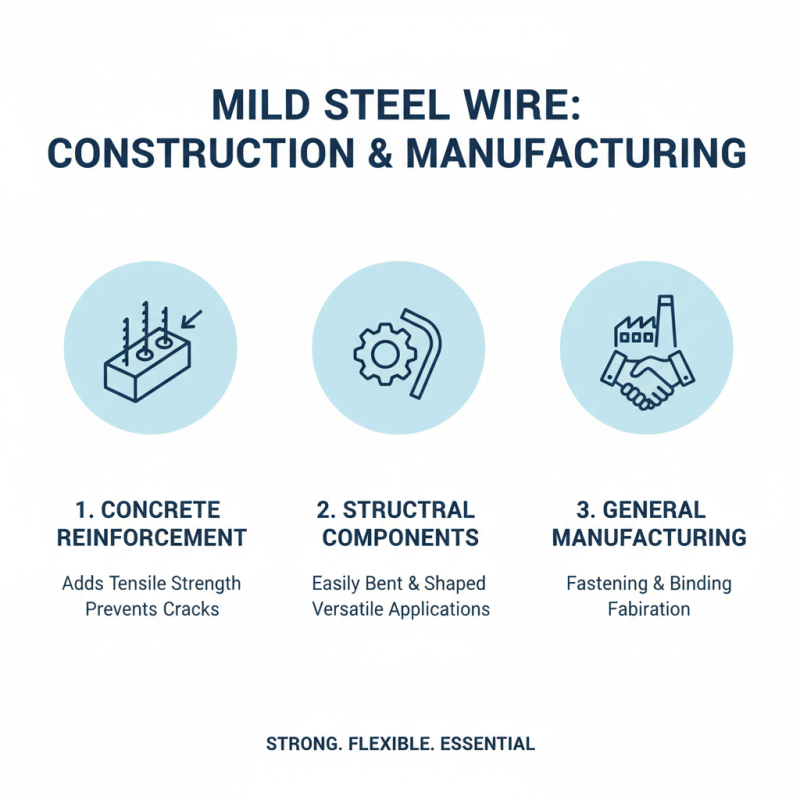
Mild steel wire plays a crucial role in construction and manufacturing. This versatile material is strong yet flexible, making it ideal for various applications. Builders often use it to reinforce concrete, where it adds tensile strength and helps prevent cracks. Additionally, its malleability allows for easy bending and manipulation, which is essential in structural components.
In the manufacturing sector, mild steel wire is used in creating products like fencing and wire mesh. These items serve multiple purposes, from securing construction sites to providing security in residential areas. Mild steel wire can also be found in the production of cables and fasteners, where durability is key.
**Tip:** Always choose the right gauge of wire for your project. Thicker wire may offer more strength but can be harder to work with.
Careful attention should be paid to the environment where the wire will be used. Mild steel wire can corrode if exposed to moisture without proper coating. There’s a trade-off between cost and longevity that must be considered.
**Tip:** Regularly inspect any mild steel wire used outdoors. Early detection of rust can save costs on replacements later.
Understanding Stainless Steel Wire and Its Corrosion Resistance
Stainless steel wire is a popular choice in many applications. Its resistance to corrosion sets it apart from other materials. In humid environments, this wire excels, resisting rust and degradation, enhancing longevity. This resistance comes from a layer of chromium oxide. This layer forms when exposed to air, offering protection.
However, not all stainless steel wires are the same. Variants exist, such as austenitic and ferritic types. Each has unique properties suited for different tasks. For example, austenitic wire is very ductile. Many industries use it, including construction and manufacturing. On the flip side, ferritic wire holds up well in moderate heat.
Despite these advantages, challenges remain. Stainless steel wire can be expensive. This cost might deter some users. Additionally, it can be difficult to weld. Users must consider their specific needs carefully. Understanding these factors helps in making informed decisions. Ultimately, stainless steel wire offers strength and resilience, but it is essential to weigh the pros and cons.
High Carbon Steel Wire: Characteristics and Uses in Industry
High carbon steel wire is known for its strength and durability. This type of wire contains carbon content ranging from 0.6% to 1.4%. Its high tensile strength makes it suitable for various industrial applications. You will find it often used in construction and manufacturing industries. It can withstand heavy loads and resist deformation. This is crucial for structures that require stability.
In the automotive industry, high carbon steel wire is commonly used for making springs and cables. These components demand elasticity and resistance to wear. In many cases, the wire undergoes heat treatment to enhance its properties. However, working with high carbon steel may present challenges. For instance, it can be more brittle compared to low carbon alternatives. This brittleness requires careful handling during fabrication and installation.
Additionally, high carbon steel wire finds usage in the production of fencing and wire ropes. These products benefit from the wire's high strength. Yet, they may suffer from corrosion if not properly coated or treated. Regular maintenance is necessary to ensure longevity. The trade-off between strength and flexibility sometimes leads to failures in specific applications. It's important for industries to assess these factors when choosing the right type of wire.
Different Types of Steel Wire and Their Industrial Uses
Specialty Steel Wires: Types and Applications in Specific Industries
Specialty steel wires are crucial in various industries. These wires are designed for specific functions and environments. For example, stainless steel wire is widely used in medical applications. Its corrosion resistance makes it ideal for surgical instruments and implants.
Another type is galvanized wire. It is coated with zinc to prevent rust. Galvanized wire is common in construction and fencing. It provides durability in harsh conditions. However, over time, it may deteriorate if not maintained properly.
Moreover, spring wire is essential in automotive and manufacturing sectors. Its elasticity allows it to return to its original shape after being stretched. This feature is vital in creating reliable springs that withstand repeated use. Yet, the manufacturing of these wires needs constant innovation to meet evolving industry standards.