Leave Your Message

2026 Best Corrugated Steel Plate for Global Buyers

Choosing the 2026 Best Corrugated Steel Plate requires more than comparing prices or surface appearance. Global buyers must examine steel grade, profile depth, coating weight, thickness tolerance, and expected service conditions. A plate that performs well in a dry warehouse may fail sooner near a coastal construction site. Small details matter.

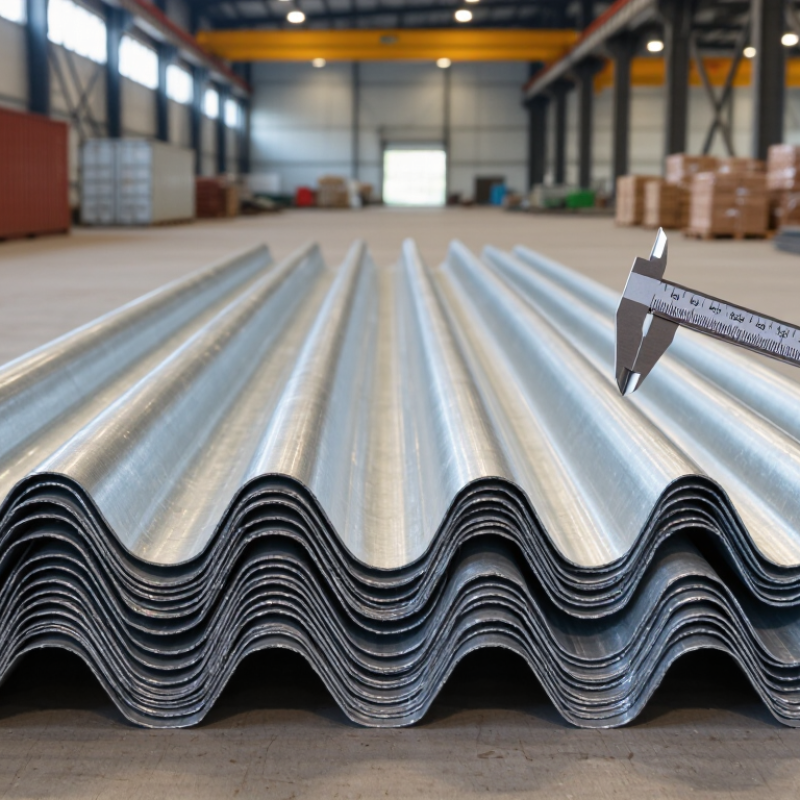
A practical evaluation should begin with technical documents and physical samples. Check mill certificates, coating specifications, dimensional reports, and independent test results. Measure the sheet with a calibrated micrometer. Inspect the ribs for consistent spacing, clean edges, and visible coating coverage. Salt spray resistance, forming performance, and load capacity also deserve attention. Standards such as ASTM, EN, JIS, or equivalent regional requirements should match the project location.

There is no universal winner.

The best Corrugated Steel Plate depends on climate, structural design, transport distance, installation methods, and local compliance rules. Experienced buyers should also review packaging quality, container loading, traceability, and supplier response times. A low quotation can become expensive after damage, delays, or unsuitable tolerances appear. However, technical claims are not always complete. Some supplier data may need independent verification, and laboratory results may not reflect every jobsite condition. This guide compares practical factors for 2026 purchasing decisions, while recognizing that each market requires careful review. Reliable sourcing is not only about buying stronger steel. It is about selecting predictable performance, documented quality, and support that remains available after delivery.
2026 Best Corrugated Steel Plate for Global Buyers

What Corrugated Steel Plate Is and How It Is Made

Corrugated steel plate is a flat steel sheet shaped into repeating ridges and valleys. These folds increase stiffness without adding much material. The profile helps roofing, wall cladding, drainage channels, and structural decking resist bending and impact. According to the World Steel Association’s World Steel in Figures 2025, global crude steel production reached about 1.88 billion tonnes in 2024. That scale supports broad material availability, but quality still varies between mills and regions. Buyers should confirm thickness, coating mass, yield strength, and profile dimensions. Small differences matter.

Manufacturing begins with steel slabs or coils. Rolling reduces the steel to a controlled gauge. Pickling removes surface scale, while galvanizing or metallic coating improves corrosion resistance. Some products receive an additional organic coating. A roll-forming line then passes the sheet through shaped rollers. Each station increases the corrugation gradually. Sudden forming can create cracks. Cut-to-length equipment produces panels for transport and installation. Dimensional checks, coating tests, and tensile tests support compliance with standards such as ASTM A653 or ASTM A792. Field inspections often find damaged edges before installation. That is a preventable weakness. Engineers also review local wind, snow, span, and drainage conditions, rather than selecting a profile by appearance alone. A heavier plate is not automatically the safest choice. Poor overlap detailing can still cause leakage and premature corrosion. Geological Survey and industry production data show steel’s scale, but project reliability depends on smaller decisions.

2026 Best Corrugated Steel Plate for Global Buyers

What Corrugated Steel Plate Is and How It Is Made

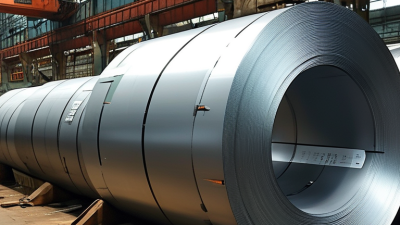
Corrugated steel plate is flat steel sheet formed into repeated ribs or waves to improve stiffness, drainage, and load distribution. It is commonly produced by uncoiling steel coil, leveling and cutting the sheet, roll-forming the corrugations, and applying or retaining a protective metallic coating such as zinc.

The chart compares the minimum specified yield strength of common structural galvanized steel grades under EN 10346. Higher yield strength can support greater structural loads, but the best grade also depends on thickness, corrugation geometry, coating protection, forming requirements, and local building standards.

Data source: EN 10346 structural steel grade requirements. Values show minimum specified yield strength in megapascals (MPa), not company or brand performance.

Key Types and Profiles for Different Global Applications

2026 Best Corrugated Steel Plate for Global Buyers

Choosing the best corrugated steel plate in 2026 starts with the application, not appearance. Different profiles control strength, drainage, coverage, and installation speed.

Sinusoidal profiles suit residential roofs, farm buildings, and light wall cladding. Their rounded ribs offer reliable water flow and simple handling. Trapezoidal profiles provide deeper ribs and stronger spanning performance. They are practical for warehouses, factories, and commercial roofing. Box-rib plates create a cleaner architectural line while supporting larger panels. Standing seam profiles reduce exposed fasteners and work well where weather protection matters. Short profile, strong coverage.

Material selection also depends on local climate. Galvanized steel performs well in many inland environments. Zinc-aluminum coatings can offer additional protection in humid conditions, but buyers should verify the coating specification. Coastal projects need careful attention to salt exposure, edge protection, and fastening materials. Panel thickness, rib height, purlin spacing, and wind loads must match local engineering requirements.

In project reviews, I check technical drawings before comparing prices. A cheaper sheet can create higher costs through leakage, replacement, or difficult installation. I have also seen buyers overestimate coating performance without considering cut edges and damaged surfaces. No selection is perfect. Confirm regional standards, packing methods, tolerances, and test documents before ordering. Small details often decide whether a profile performs well across borders.

Material Standards, Coatings, and Performance Requirements

For global buyers, corrugated steel plate selection starts with the substrate, not the profile. ASTM A653 covers zinc-coated steel, while EN 10346 covers continuously coated flat products. Confirm the steel grade, yield strength, thickness, and dimensional tolerances. World Steel Association data recorded about 1,893 million tonnes of crude steel production in 2023, showing strong supply capacity, but quality still varies by mill and region. Request test certificates for every shipment.

Coating choice controls service life. Galvanized zinc protects exposed steel through a barrier and sacrificial action. Aluzinc-type coatings can improve heat reflection and corrosion resistance, but edge cuts still need attention. ISO 9223 helps classify atmospheric corrosivity, from low rural exposure to severe coastal or industrial conditions. Match coating mass to the environment. A thicker coating is not automatically better. Drainage, fasteners, storage, and installation can matter more than buyers expect. I have seen excellent sheets fail after poor stacking trapped water.

Tips: Specify ASTM or EN compliance, coating mass, paint system, salt-spray evidence, and minimum bend performance. Ask for independent inspection before loading. Use dry spacers between bundles. Never accept “standard coating” without a measured value. Real sites are less forgiving than catalogs. Rethink the lowest-price option when replacement access is difficult. Test samples before approving large orders, especially for coastal projects.

2026 Best Corrugated Steel Plate for Global Buyers - Material Standards, Coatings, and Performance Requirements
Evaluation Dimension Recommended Specification Common Technical Range or Requirement Relevant Standard or Reference Buyer Verification Point
Base steel type Hot-dip coated low-carbon or structural steel sheet Cold-formable grades for roofing and cladding; structural grades for higher load demand ASTM A653/A653M; EN 10346; JIS G3302 Confirm steel grade, mechanical properties, heat number, and mill test certificate
Nominal thickness 0.45–1.20 mm for common building applications Approximately 0.45–0.75 mm for lightweight roofing; 0.80–1.20 mm for heavier-duty applications Product design and local building requirements determine the final thickness Specify whether the stated thickness is base-metal thickness or total coated thickness
Effective cover width Typically 760–1,100 mm Depends on the corrugation profile, side-lap design, and forming equipment Manufacturer’s approved profile drawing and project tolerances Check effective cover width rather than overall sheet width for quantity calculations
Sheet length Cut-to-length sheets Commonly 2–12 m; practical maximum depends on transport, handling, and site access Project delivery and installation plan Confirm length tolerance, squareness, camber, and packaging method
Corrugation depth Approximately 17–76 mm Lower profiles suit light cladding; deeper profiles generally provide greater spanning efficiency Profile-specific structural calculation Do not compare load capacity using sheet thickness alone; profile geometry is critical
Galvanized coating Z180Z275Z350 Total coating mass on both sides: 180, 275, or 350 g/m² respectively EN 10346 coating designation; ASTM A653 equivalents include G60 and G90 classes Request coating-mass test results and verify that the value is total both-side mass
Aluminium-zinc coating AZ100–AZ150 for enhanced atmospheric corrosion resistance Total aluminium-zinc coating mass on both sides is commonly 100–150 g/m² EN 10346 AZ coating designation; ASTM A792/A792M Confirm the coating type because aluminium-zinc and zinc coatings are not interchangeable
Aluminium-magnesium-zinc coating Selected for demanding corrosion environments Coating mass and corrosion performance vary by grade and product specification Applicable regional product standard and supplier technical datasheet Require independent corrosion data when the product is intended for coastal or industrial exposure
Paint system Factory-applied organic coating over metallic coating Common systems include polyester, high-durability polyester, polyurethane, and plastisol; topcoat thickness is project-specific EN 10169; ASTM A755/A755M; project coating specification Confirm primer, topcoat, reverse-side coating, total dry-film thickness, and color-retention requirement
Mechanical strength Grade selected according to span, wind, snow, and maintenance loads Typical yield-strength classes range from about 220 MPa for forming grades to 350 MPa or higher for structural grades ASTM A653/A653M; EN 10346; JIS G3302 Use certified yield strength, tensile strength, and elongation values in structural design
Bendability and forming Cold-formable steel with controlled minimum inside bend radius Minimum bend radius depends on steel grade, coating, thickness, rolling direction, and forming process Grade-specific standard and forming recommendations Request the recommended bend radius to prevent cracking, flaking, or coating damage
Corrosion environment Coating selected by exposure category Higher coating mass and suitable paint systems are preferred for humid, coastal, polluted, or industrial environments ISO 9223 atmospheric corrosivity classification; project exposure assessment Consider salt spray, condensation, airborne pollutants, cut edges, fasteners, and dissimilar-metal contact
Roof and wall load performance Profile-specific load tables or engineering calculations Capacity depends on thickness, yield strength, corrugation depth, span, support spacing, lap, fasteners, and load combination Local building code; EN 1993-1-3; ASCE 7 or equivalent regional code Obtain allowable or design load tables for the exact profile and support condition
Wind resistance Designed for local positive and negative wind pressures Uplift resistance is strongly affected by fastener spacing, edge zones, side laps, and purlin spacing Local wind code; tested system data where required Verify pull-out, pull-over, lap, and fastener performance rather than relying on sheet strength alone
Fire performance Non-combustible steel substrate with coating system assessed separately Steel itself does not contribute fuel, but the complete roof or wall assembly may require fire classification EN 13501-1; ASTM E84 or other locally accepted test methods Request fire classification for the complete assembly, including insulation and membranes
Thermal expansion Allow movement in long runs and restrained installations Steel has a linear thermal expansion coefficient of approximately 12 × 10⁻⁶ per °C Engineering design and installation guidance Check fastener type, hole clearance, sheet length, movement joints, and temperature range
Dimensional tolerances Controlled width, thickness, length, flatness, and profile geometry Tolerances vary by material standard, thickness, profile, and whether dimensions are nominal or effective ASTM, EN, JIS, or project-specific tolerance requirements Include tolerances in the purchase contract and inspect random bundles on arrival
Fastener compatibility Corrosion-compatible coated or stainless fasteners with sealing washers Fastener selection must match the sheet coating, support material, environment, and expected service life Project specification and local roofing installation standard Prevent galvanic corrosion and verify washer durability, embedment, spacing, and torque
Quality documentation Complete traceability package Mill test certificate, coating report, paint datasheet, dimensional inspection, packing list, and certificate of conformity ISO 9001 quality system may support process control but does not replace product testing Match coil number, bundle number, test results, and shipment documents before installation
Sustainability and recyclability Steel sheet with documented recycled-content and environmental data where required Steel is widely recyclable; environmental impact depends on production route, coating, transport, and service life ISO 14025 environmental product declarations; project green-building criteria Request an environmental product declaration or verified material-content statement when applicable
Note: Final thickness, coating class, profile, span, fastening pattern, and load capacity must be confirmed against the applicable local building code and the approved project design.

How to Evaluate Suppliers, Quality, Pricing, and Delivery

2026 Best Corrugated Steel Plate for Global Buyers

Supplier evaluation should begin with traceable evidence, not polished brochures. Request mill certificates, coating test results, dimensional records, and recent export references. For galvanized plate, confirm the applicable standard, such as ASTM A653 or EN 10346. Check yield strength, tensile strength, coating mass, thickness tolerance, and corrugation depth. A reliable supplier should explain testing methods clearly. If answers remain vague, treat that as a quality warning.

Market scale matters when reviewing prices. The World Steel Association reported approximately 1.88 billion tonnes of global crude steel production in 2024. This huge output does not guarantee stable plate pricing. Compare at least three offers using the same thickness, coating, grade, quantity, and Incoterm. Separate steel cost from forming, packaging, inland transport, duties, and ocean freight. A low quote can still be wrong. I would also request a validity period because raw material and freight costs can change quickly.

Delivery checks need practical details. The UNCTAD Review of Maritime Transport 2024 states that ships carry over 80% of world trade by volume. Port congestion, document errors, and container shortages can therefore affect the promised date. Ask for a production schedule, inspection window, packing photos, and a backup loading port. Confirm whether plates are bundled with edge protection and moisture-resistant wrapping. Perfect planning is rare. The buyer should record small delays and revise future lead-time assumptions.

Installation, Maintenance, Safety, and Environmental Considerations

2026 Best Corrugated Steel Plate for Global Buyers

Installation, Maintenance, Safety, and Environmental Considerations

Choosing corrugated steel plate requires more than comparing thickness and price. Confirm the required load, coating, profile, and local building standards before ordering. A plate suitable for dry inland storage may fail sooner near saltwater. Measure twice. Ask a qualified structural engineer to review unusual spans, strong winds, snow loads, and seismic conditions.

During installation, store sheets above ground on timber supports, with ventilation beneath the stack. Keep it dry. Water trapped between sheets can create staining and early corrosion. Workers should wear cut-resistant gloves, eye protection, and stable footwear. Use proper lifting equipment for long panels, because sharp edges and sudden movement cause common injuries. Fasteners must match the plate and supporting structure. Over-tightening can crush the profile and damage protective coatings.

Maintenance should include inspections after storms and at least once each year. Look for loose fasteners, blocked drainage, scratches, and rust around cut edges. Clean dirt with mild water and a soft brush; abrasive tools may expose bare steel. Repair damaged areas according to the coating supplier’s technical guidance. Environmental performance also depends on transport distance, service life, and recycling access. Steel is widely recyclable, but mixed coatings and contaminated waste need controlled handling. A practical weakness remains: site records are often incomplete, making future repairs harder. Keep installation dates, batch details, inspection photos, and repair notes in a simple maintenance file.