Choosing the right Steel Strips supplier in 2026 means looking beyond a low price per tonne. Buyers need consistent thickness, dependable delivery, clear material records, and a product suited to its application. Small differences matter. A strip that varies in flatness or edge condition can slow stamping lines, complicate forming, or create avoidable scrap.
Industry reports provide useful context, but not a supplier ranking. World Steel Association’s October 2024 Short Range Outlook forecast global steel demand of about 1.77 billion tonnes in 2025, following a weaker 2024. The OECD’s 2024 Steel Outlook examined capacity growth and persistent market pressures. These figures describe the wider steel market; they do not measure demand for precision strip specifically. That distinction matters when comparing mills, service centers, and specialist processors.
This guide examines suppliers through practical purchasing criteria: grade range, thickness and width tolerances, surface finish, coil handling, certification, traceability, and delivery performance. Ask for recent inspection documents and confirm whether stated tolerances apply to the full order. Check sample coils where possible. A polished website is not proof of stable production. Nor does a large catalogue guarantee the right technical support. Supplier capabilities can vary by plant, product grade, and order volume, so treat broad claims with care. The comparisons that follow aim to help manufacturers and buyers identify credible options, while recognizing that the best choice depends on the part, production process, and required risk controls. No list can replace a qualified technical review.
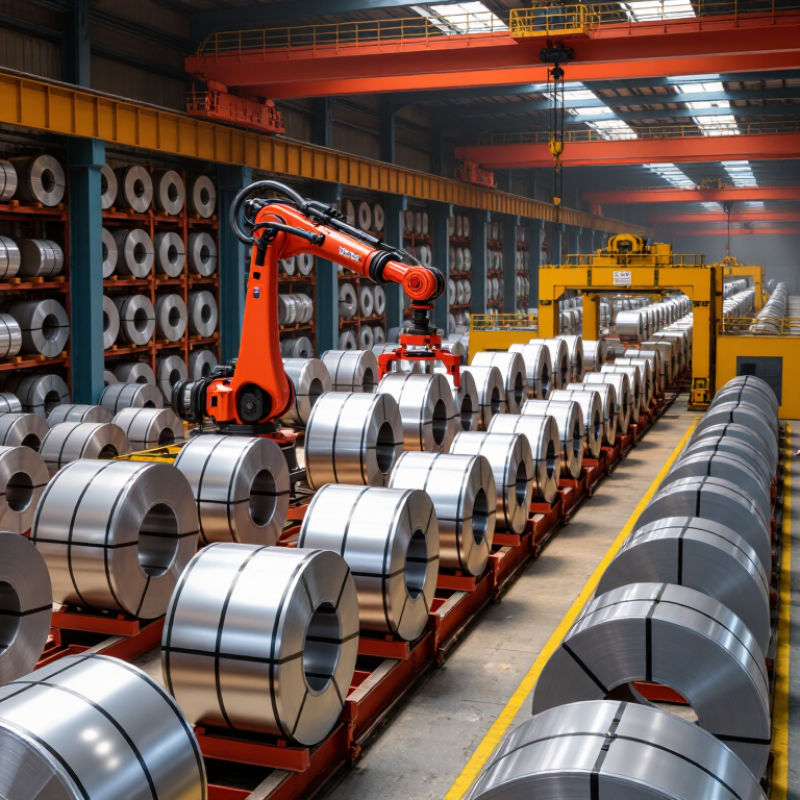
Steel strips are narrow, flat sections of rolled steel, supplied in coils or cut lengths. Their thickness, width, edge finish, and temper affect how reliably they perform. Some strips are soft and easy to form; others are hardened for wear or spring action. Coatings and steel grades vary, too. Small differences matter.
In automotive plants, strips become brackets, clips, seat components, and reinforcement parts. Appliance makers use them in hinges, panels, and internal supports. Electrical equipment may rely on carefully specified strip for transformer laminations or enclosures, where magnetic properties or conductivity matter. Construction uses include framing, fastening, and support components. Packaging lines and hand-tool production also depend on consistent strip dimensions. The right choice depends on the part, not just the steel’s name.
Suppliers are useful when they can explain tolerances, testing, and processing options clearly. Ask how they control thickness across a coil and protect edges during slitting. A sample can reveal burrs or uneven surface finish that a specification sheet may not show. Check traceability and certificates for critical applications. Small details count. One difficult trade-off is choosing a tighter tolerance: it may reduce production issues, but can raise cost or limit availability. Match requirements to the actual forming, welding, or cutting process.
What Are the Best Steel Strips Suppliers in 2026?
How Steel Strip Suppliers Differ by Products and Capabilities
Steel strip suppliers differ in more than price. Some specialize in carbon steel; others offer stainless grades, precision cold-rolled strip, or coated products. Their processing options matter, too. Check available thicknesses, slit widths, edge condition, temper, and surface finish. A strip intended for a stamped component may need tighter tolerances than one used for general fabrication. Small differences count.
Production scale offers context, not a supplier ranking. World Steel Association reported global crude steel production of 1.892 billion tonnes in 2023, reflecting a vast and varied supply chain. For buyers, the useful questions are more specific: Can the supplier hold the required width across a coil? Does it provide inspection records and traceable material certificates? Can it package narrow coils to prevent edge damage during handling? Ask for sample measurements and documentation before committing. A specification sheet can look precise; real coil consistency is what matters.
Tips: Match the supplier’s equipment to your actual drawing and annual volume. Confirm tolerances, minimum order quantities, lead times, and packaging in writing. If a trial coil reveals variation, pause and investigate rather than assuming the next batch will improve. Not every supplier will be a fit.
| Supplier Type | Typical Products | Key Capabilities | Common Applications | Best Fit For | What to Verify |
|---|---|---|---|---|---|
| Integrated steel producer | Hot-rolled and cold-rolled strip; coated or uncoated grades, depending on the mill | Steelmaking and rolling under one production system; broad grade availability; mill-level process and quality records | Automotive components, appliances, construction products, and general manufacturing | Buyers seeking large-volume supply, consistent sourcing, and access to a broad product portfolio | Available grades and dimensions, order minimums, production lead times, inspection documents, and delivery terms |
| Cold-rolled strip specialist | Cold-rolled carbon and alloy steel strip, often supplied in coils or slit widths | Thickness and surface-finish control; coil slitting; options for different temper or hardness conditions | Precision parts, stamped components, furniture hardware, and formed products | Applications requiring controlled thickness, a suitable surface, or narrower strip widths | Thickness and width tolerances, edge condition, flatness, surface requirements, and testing method |
| Spring-steel strip producer | Hardened and tempered carbon or alloy strip, subject to grade and supplier range | Heat treatment and hardness control; supply in coils or cut lengths; grade-specific mechanical testing | Springs, clips, retaining components, and other resilient parts | Manufacturers whose parts rely on specified strength, hardness, and spring performance | Grade designation, hardness range, mechanical-property test results, decarburization requirements, and surface condition |
| Stainless-steel strip specialist | Cold-rolled stainless strip in a range of grades, finishes, and thicknesses | Grade-specific processing; surface-finish options; slitting and edge finishing where offered | Food equipment, medical devices, electronics, automotive parts, and corrosion-resistant assemblies | Buyers who need stainless grades or particular surface and corrosion-performance characteristics | Exact grade and applicable standard, finish designation, thickness tolerance, corrosion requirements, and material certificate |
| Electrical-steel strip producer | Grain-oriented or non-oriented electrical steel, supplied in coils or processed formats | Electrical and magnetic-property control; grade-specific processing and testing | Transformer cores, motors, generators, and other magnetic components | Equipment makers specifying magnetic performance as well as mechanical dimensions | Electrical-steel grade, core-loss and magnetic-property data, coating or insulation requirements, and applicable test standards |
| Service center or strip processor | Strip sourced from multiple mills; slit coils, cut-to-length blanks, or other processed formats | Slitting, leveling, blanking, inventory holding, and smaller or more flexible shipment quantities | Fabrication, stamping, maintenance supply, and manufacturers with variable demand | Buyers prioritizing local stock, processing convenience, or lower-volume purchasing | Original material source, traceability, processing tolerances, stock availability, and certification for the supplied lot |
| Precision strip converter | Thin or narrow strip processed to customer-defined dimensions and specifications | Fine slitting, edge-condition control, tension leveling, and customized packaging, depending on equipment | Electronics, small precision components, sensors, and specialized formed parts | Applications with demanding dimensional, edge, or handling requirements | Capability limits, tolerance agreement, burr and camber criteria, sample approval, and inspection records |
In 2026, evaluate steel strip suppliers on measurable quality, not polished sales claims. Ask for mill test certificates showing chemistry, tensile strength, hardness, and thickness tolerances. Check whether certificates can be traced to the coil number on each delivery. Review ISO 9001 status, but verify actual inspection records too. A certificate alone does not prove a stable process. Request sample coils and compare edge condition, surface finish, and thickness at several points.
Capacity and consistency matter. The World Steel Association’s World Steel in Figures 2025 reports 1,882.6 million tonnes of crude steel production in 2024. That scale makes clear why buyers should assess both supply continuity and product fit; global output does not guarantee the right grade or reliable delivery. Ask suppliers to document lead-time performance, minimum order quantities, packaging, and how they handle nonconforming coils. Check emissions and energy data where relevant, and ask how those figures were measured. Numbers need context. A scorecard helps, but it can miss the realities of a production line.
Tips: Run a small trial order before committing. Record coil IDs, measured thickness, and defects, then compare results with the supplier’s stated limits. Keep the inspection method consistent.
The right steel strip supplier is the one that consistently meets your production requirements. Compare suppliers on grade range, thickness tolerance, edge condition, coil dimensions, and surface finish. Ask for recent inspection records and material certificates, not just a polished product sheet. In 2024, global crude steel production reached 1,882.6 million tonnes, according to the World Steel Association. That scale makes consistent quality checks especially important.
For shortlisting, request sample coils and confirm how the supplier controls thickness across the strip, not only at one measurement point. Check whether it can provide traceability, reliable lead times, and clear packaging details to prevent coil-edge damage in transit. The OECD’s 2024 analysis of steel markets highlights ongoing capacity pressures. Price alone may not tell you how dependable a supplier will be. A neat datasheet can hide practical gaps; I would verify claims against trial-run results.
Tips: Share your exact application, target tolerances, and monthly volume before requesting a quote. Ask how defects are handled. Then compare the written answers.
Comparing steel strip suppliers starts with the part you need to make, not a broad claim about quality. A spring component may need consistent temper and flatness, while a stamped enclosure may prioritize clean edges and stable thickness. Share your alloy grade, thickness and width ranges, tolerances, finish, and expected annual volume. Ask whether measurements refer to incoming coil, slit strip, or finished parts; that detail can prevent mismatched quotes. That sounds obvious. It isn’t. Request a sample from a production-representative batch, then check it with your own gauges and forming process.
Compare documented capability, not just a specification sheet. Look for inspection records, material traceability, and clear handling of out-of-tolerance coils; ask how often key dimensions are verified. Confirm slit-edge condition, burr limits, packaging, and corrosion protection if strips will be stored before processing. Lead time matters, but ask what happens when demand changes or a mill delay occurs. In supplier reviews, I’ve found that a polished quotation can still leave assumptions unstated. Write down minimum order quantities, setup charges, delivery terms, and who approves substitutions. Then weigh total cost against scrap risk, line stoppages, and incoming inspection effort. A short trial run may reveal issues a sample cannot.