Choosing the best Galvanized Drain Pipe requires more than comparing diameter and price. The pipe must suit the drainage load, soil conditions, connection method, and expected service life. A shiny zinc coating is useful, but it is not permanent protection.
The National Association of Home Builders’ Life Expectancy of Housing Components report places galvanized steel plumbing life at roughly 20 to 50 years. That figure is only a guide. Moisture, acidic water, trapped sediment, and poor ventilation can shorten performance. The U.S. Environmental Protection Agency also warns that corrosion control depends on water chemistry and pipe materials. Drainage conditions deserve the same caution.
Plumbing educator Larry Weingarten describes the central problem simply: “Galvanized steel pipes rust from the inside out.” That warning matters during inspection. A pipe may look sound externally while its internal opening resembles a narrowed tunnel. Check wall thickness, zinc coverage, threaded ends, slope, and visible rust staining. Confirm that the product matches applicable ASTM requirements and local plumbing rules.
Not every galvanized product is a good drain solution. Some are designed for water supply, not continuous wastewater exposure. That shortcut can be costly. A practical selection should compare coating quality, corrosion resistance, joint reliability, load rating, maintenance access, and replacement difficulty. Inspectors and licensed plumbing professionals can verify these details on site.
The evidence is useful, but imperfect. Service-life estimates vary by building and water conditions. Treat them as planning data, not promises.
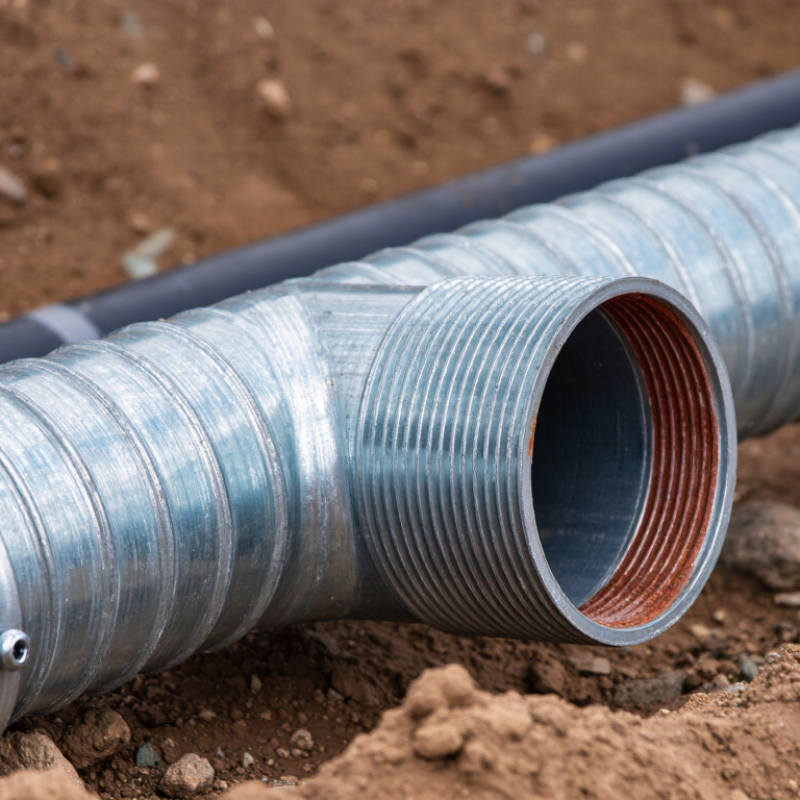
How to Choose the Best Galvanized Drain Pipe?
Types and Uses of Galvanized Drain Pipes
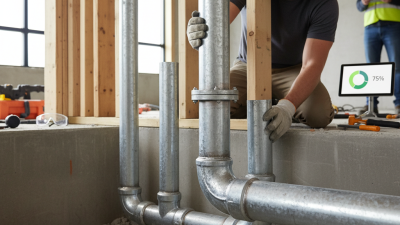
Galvanized drain pipes are steel pipes coated with zinc to slow rusting. Their uses depend on shape, wall thickness, and drainage conditions. Smooth-wall pipe can carry roof runoff or wastewater where a rigid, impact-resistant line is useful. It is often joined with threaded fittings, so check that threads are clean and connections fit snugly. A poor joint can leak.
Corrugated galvanized steel pipe has ridges that add strength while keeping the pipe relatively light. It is commonly used for culverts, driveway crossings, and stormwater routes beneath paths or low embankments. The corrugations handle soil pressure, but they can collect sediment more readily than a smooth interior. Not ideal for every site. Perforated versions allow water to enter along the pipe and are used in drainage trenches around foundations or landscaped areas. They need suitable filter fabric and gravel to limit clogging.
Match the pipe to the water flow, soil load, and exposure to moisture or salts. Measure the route and outlet carefully; even a small dip can leave standing water. Also inspect older galvanized lines for internal scaling, leaks, or reduced flow. Zinc protection helps, but it does not make steel permanent. In some settings, I would reconsider galvanized pipe if corrosion is already visible or maintenance access is difficult.
How to Choose a Galvanized Drain Pipe: Nominal Size vs. Actual Outside Diameter
Nominal pipe size is a designation, not a direct measurement of the pipe’s outside diameter. The chart shows standard outside diameters for selected NPS sizes. Check local plumbing codes and the pipe’s wall thickness when choosing a drain pipe; inside diameter varies with wall thickness.
Pipe size affects how reliably a galvanized drain line carries wastewater. A pipe that is too small may drain slowly or clog, especially where several fixtures share one branch. An oversized line is not automatically better; low flow can leave solids behind. Size the pipe for the fixtures it serves, not by appearance alone.
Start by noting each fixture, the branch length, and how many connections join it. A short run from one sink may need a different diameter than a shared line carrying a sink, shower, and laundry discharge. Slope matters, too. Even the right diameter can perform poorly if the pipe sags or has an unsuitable grade. Measure the existing pipe’s inside diameter where possible; nominal sizes do not always match measured openings.
Check applicable plumbing requirements and fixture-load tables before choosing a size, since rules vary by location and layout. For an existing system, look for buildup, corrosion, and mismatched fittings that can narrow the passage. I once assumed a larger replacement would solve slow drainage, but a poorly aligned connection was part of the problem. Measurements help. If several branches meet, or sizing remains uncertain, ask a qualified plumbing professional to review the layout before installation.
| Factor | What to Check | Practical Guidance | Why It Matters |
|---|---|---|---|
| Drainage application | Identify whether the pipe will carry roof runoff, surface water, foundation drainage, or wastewater. | Match the pipe and fittings to the drainage system and applicable local plumbing or building requirements. | Different systems have different flow, material, and installation requirements. |
| Required flow capacity | Estimate the volume of water to be conveyed, including peak rainfall or expected discharge where relevant. | Use a hydraulic calculation or local code guidance rather than selecting a size by appearance alone. | An undersized pipe can back up or overflow; an oversized pipe may add unnecessary cost. |
| Nominal pipe size and inside diameter | Check the pipe’s nominal size, actual inside diameter, and compatibility with connected fittings. | Confirm dimensions from the applicable product standard and manufacturer’s specification; nominal size is not always the measured inside diameter. | Usable flow area and fitting compatibility depend on the pipe’s actual dimensions. |
| Slope and layout | Review the run length, elevation changes, bends, and available fall. | Follow the slope required by the system design and local code; avoid abrupt direction changes where practical. | Slope and layout affect gravity flow, sediment movement, and the risk of standing water. |
| Solids and debris | Consider leaves, grit, sediment, or other material likely to enter the drain. | Provide suitable inlets, strainers, cleanouts, and access for maintenance where needed. | Debris can reduce capacity or cause blockages, especially at bends and transitions. |
| Corrosion exposure | Assess soil chemistry, moisture, salt exposure, water quality, and contact with dissimilar metals. | Verify that galvanized steel is suitable for the site conditions and the intended service; consider an alternative material if corrosion risk is high. | Protective zinc coatings can deteriorate over time, and service life varies with the environment. |
| Wall thickness and coating | Compare the specified steel thickness, zinc coating, and relevant product standard. | Choose specifications based on structural loads, exposure, and project requirements; do not assume all galvanized pipe has the same coating or wall thickness. | These properties influence durability and resistance to handling or installation damage. |
| Burial and external loads | Check burial depth, soil conditions, traffic loading, and installation method. | Use a design suitable for the expected loads and follow the specified bedding, backfill, and support details. | Improper support or excessive loads can deform or damage a drain pipe. |
| Connections and maintenance | Confirm joint type, fitting availability, access points, and cleanout locations. | Plan connections and maintenance access before installation, and use compatible components. | Reliable joints and accessible cleanouts make inspection and blockage removal easier. |
| Final size selection | Review flow calculations, code requirements, pipe dimensions, and site conditions together. | Have the size and material checked by a qualified plumbing or drainage professional when the system is complex or regulated. | A suitable selection balances capacity, durability, compliance, and installation needs. |
A galvanized drain pipe relies on its zinc coating to slow rust, so inspect more than the bright outer surface. Look for even coverage inside and out, especially near seams, sockets, and cut ends. Bare patches, heavy lumps, peeling, or sharp drips may signal uneven coating or poor handling. A smooth appearance helps, but it proves little on its own.
For a closer check, use a calibrated magnetic coating-thickness gauge on several clean areas. Take readings along the pipe and around its circumference; one measurement can miss thin spots. Check the interior too, where practical. Also inspect the zinc for firm adhesion: flaking after gentle handling is a warning sign. Test cuts deserve attention, since exposed steel can rust first. Repairs may be possible, but they need suitable zinc-rich protection.
Corrosion resistance depends on where the pipe will sit. Persistent moisture, salty air, acidic soil, and stagnant water can shorten service life. Match the coating specification to the exposure, and ask for test records when the application is demanding. I would not judge durability by shine alone. That shortcut is tempting, and sometimes wrong. Even careful checks cannot predict every site condition, so installation details and drainage matter too.
When choosing fittings for galvanized drain pipe, match the pipe’s nominal size, wall thickness, and thread form. A fitting that appears to fit may still have incompatible threads or pressure limits. Check the pipe and fitting documentation, and confirm whether the system uses tapered NPT threads. ASTM A53 covers steel pipe, while ASME B16.3 specifies dimensions and pressure-temperature ratings for threaded malleable-iron fittings. Small details matter. A poorly aligned elbow can leave a stressed joint behind a wall.
Plan for the surrounding materials, too. Direct contact between galvanized steel and copper in a damp system can encourage galvanic corrosion; use an approved isolation fitting where the design requires it. Support long runs near joints, avoid forcing misaligned pipe into place, and apply thread sealant suitable for the service.
The NACE IMPACT study estimated corrosion costs at US$2.5 trillion globally, or 3.4% of world GDP, and reported potential savings of 15–35% through corrosion-management practices.
That figure covers many industries, not drain pipe alone. Still, it is a useful reminder: compatibility and careful installation are not cosmetic choices. Even experienced installers should recheck the slope and joint alignment before closing the wall.
A galvanized drain pipe needs regular checks, even when the outside still looks sound. Look closely at joints, threaded connections, and low spots where water may sit. Orange-brown stains, flaking metal, damp soil, or a recurring musty smell can signal corrosion or a leak. A small flashlight and a dry cloth help reveal moisture around fittings. Check after heavy rain, too, when drainage problems are easier to spot.
The expected service life has no single reliable number: coating thickness, water chemistry, soil conditions, installation quality, and maintenance all matter. Hard or acidic water and persistently wet soil may speed deterioration.
Keep notes and photos of inspections; they make gradual changes easier to judge.