What Is a Structure Pipe and What Is It Used For?
A Structure Pipe is a hollow steel section designed to carry loads, resist bending, or support built elements. It commonly appears in building frames, equipment supports, handrails, sign structures, and agricultural systems. Unlike many fluid pipes, its primary purpose is structural performance rather than transporting water, gas, or chemicals.
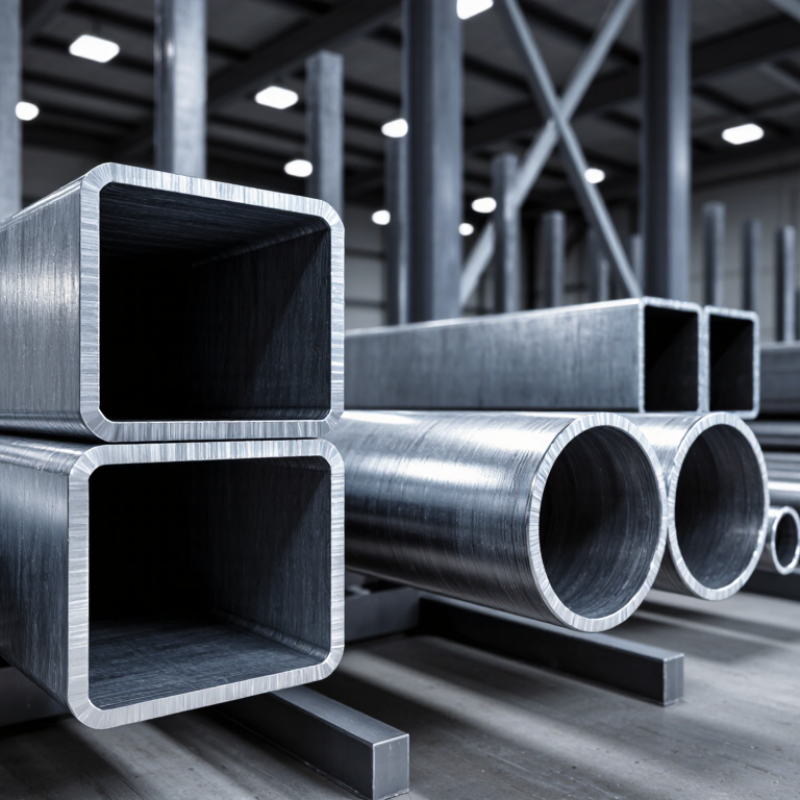
Its shape matters. Round, square, and rectangular sections distribute steel differently under compression and bending. A square tube may form a clean column, while a round section can suit braces, frames, and exposed supports. Engineers normally review wall thickness, outside dimensions, yield strength, weld quality, corrosion exposure, and connection details. ASTM A500/A500M provides widely recognized requirements for cold-formed welded and seamless carbon steel structural tubing. ASTM A53 addresses pipe products that may serve different purposes, so the terms should not be treated as interchangeable.
The market context is substantial. World Steel Association data reports global crude steel production at about 1.89 billion tonnes in 2023. That figure shows the scale of steel supply behind construction and manufacturing. It does not measure Structure Pipe demand directly. That distinction matters. Some market summaries combine structural tubing with general steel pipe, which can blur practical comparisons. Reliable selection requires more than a sales catalogue. It requires verified dimensions, mill certificates, design calculations, and suitable standards. A tube can look strong. It may still fail at a weak connection, an oversized unsupported span, or an unprotected corroded surface. This guide explains what Structure Pipe is, where it is used, and how professionals evaluate it before installation.
Definition and Classification: Structural Pipe vs. Mechanical Tubing
What Is a Structure Pipe and What Is It Used For?
Definition and Classification: Structural Pipe vs. Mechanical Tubing
A structure pipe is a hollow steel section designed to support loads or form a stable framework. It commonly appears in columns, handrails, guardrails, equipment frames, and temporary supports. Its round, square, or rectangular shape provides useful strength with less material than a solid bar. Engineers select it by considering load, span, connection method, corrosion exposure, and wall thickness. The pipe may carry compression, bending, or combined forces.
Mechanical tubing follows a different purpose. Manufacturers produce it for controlled dimensions, smooth surfaces, and consistent tolerances. It can serve in machine parts, vehicle frames, cylinders, heat exchangers, and fabricated assemblies. Its outside diameter and wall thickness are often specified directly. Structural pipe, however, may use nominal pipe sizing, which can confuse buyers. Measure carefully.
The distinction matters. A tube with accurate dimensions is not automatically suitable for a structural column. A structural pipe may also lack the surface finish or dimensional precision needed for moving machine components. It is tempting to treat both products as interchangeable. That shortcut can fail during welding, fitting, or load calculation. Material grade, manufacturing method, inspection records, and applicable standards should match the actual service. The boundary is not always neat, especially in light-duty frames. A qualified engineer should verify unusual designs, because a quick catalog comparison cannot replace load analysis.
Manufacturing Routes: ERW and Seamless Pipe for Load-Bearing Applications
What Is a Structure Pipe and What Is It Used For?
A structure pipe is a hollow steel section designed to carry loads or resist movement. It may support columns, frames, platforms, handrails, or temporary construction assemblies. Its circular shape distributes stress efficiently and reduces weight compared with some solid sections. Engineers select it by considering diameter, wall thickness, steel grade, connection method, and expected loads. A clean surface alone proves little.
Manufacturing Routes: ERW and Seamless Pipe for Load-Bearing Applications
Electric resistance welded, or ERW, pipe begins with a flat steel strip. Rollers form the strip into a tube, then electrical resistance heats and joins the edges. The weld area requires careful control, because alignment, heat input, and surface preparation affect performance. Modern production can include ultrasonic testing, dimensional checks, and hydrostatic testing. ERW pipe often provides consistent dimensions and efficient material use for structural frames and general load-bearing systems.
Seamless pipe starts as a solid round billet. The billet is heated and pierced, then rolled into a hollow section. It has no longitudinal weld, which can benefit applications involving high pressure, cyclic stress, or demanding temperature conditions. However, seamless production does not automatically mean superior structural performance. Wall variation, straightness, grade, and inspection records still matter. The choice is not always obvious. A qualified engineer should match the manufacturing route with loading, connections, corrosion exposure, and applicable specifications. Even experienced teams sometimes overvalue a seamless label and overlook the actual design details.
Key Specifications: ASTM A500 Grade B at 46 ksi Minimum Yield Strength
A structure pipe is a hollow steel section designed to carry loads, frame spaces, or protect working components. Its circular, square, or rectangular shape provides useful strength with less material than a solid bar. Common applications include building frames, equipment supports, guardrails, and agricultural structures.
ASTM A500 Grade B is a widely specified carbon steel grade for structural tubing. Its minimum yield strength is 46 ksi, or approximately 317 MPa. Yield strength indicates when permanent deformation may begin. This value helps engineers evaluate columns, braces, and frames under expected loads. Grade B also offers a minimum tensile strength of 58 ksi, supporting practical fabrication and service requirements.
Details matter.
A qualified inspector should check the material certificate, outside dimensions, wall thickness, and surface condition. Wall thickness can vary slightly, and that variation affects load capacity. Welded tubing may also require careful examination around the seam, especially after cutting or forming. In field work, measure the actual section instead of relying only on nominal dimensions. This habit prevents avoidable design errors.
Designers should consider corrosion, connection details, buckling length, and applied loads. A 46 ksi yield value does not guarantee safe performance by itself. Poor drainage or an undersized connection can weaken an otherwise suitable pipe. Calculations should follow the applicable structural code and project specifications. Some installations deserve more review than they usually receive.
Applications in Columns, Trusses, Frames, Guardrails, and Infrastructure
A structure pipe is a hollow steel section designed to carry loads, resist impact, or guide forces through a building or infrastructure system. Its circular or rectangular profile offers strength with less material than many solid sections. However, appearance can mislead. Wall thickness, steel grade, weld quality, corrosion, and connection design determine performance.
In columns, structure pipe transfers roof and floor loads toward the foundation. Engineers may fill the pipe with concrete when higher compression resistance or fire protection is required. In trusses, pipes form lightweight top chords, bottom chords, and diagonal members. Their smooth surfaces reduce exposed edges, but connections need careful detailing. A poorly fitted joint can undermine an otherwise efficient truss. Frames use pipe sections for portals, equipment supports, and modular structures. They provide clean lines and useful torsional resistance, though hidden corrosion can be difficult to inspect.
Guardrails rely on structure pipe for posts, rails, and impact control. Designers must consider vehicle forces, pedestrian safety, spacing, and local code requirements. Infrastructure projects use larger sections in bridge components, sign supports, utility structures, and protective barriers. The Federal Highway Administration’s 2024 National Bridge Inventory records more than 620,000 public bridges in the United States, showing the scale of ongoing inspection and renewal needs. Globally, the World Steel Association reported about 1.89 billion tonnes of crude steel production in 2023, supporting steel’s continuing role in construction. Still, material volume alone proves little. Drainage, coatings, weld inspection, and maintenance records often decide service life. Real sites are rarely perfect.