Selecting a reliable Hot Dip Galvanizing Bar manufacturer requires more than comparing prices or production volume. Buyers must examine coating thickness, steel chemistry, dimensional accuracy, surface finish, and batch consistency. These details affect how bars perform beside highways, in industrial frames, and around coastal facilities. A bright surface alone proves very little.
This guide introduces ten leading manufacturers worldwide and explains why they deserve attention. The comparison considers production capacity, quality systems, export experience, customization, delivery performance, and technical support. It also considers practical details, such as thread protection, straightness tolerances, zinc adhesion, and packaging during ocean transport. Those small choices can prevent damaged threads and premature corrosion. They matter.
Dr. Frank Goodwin, a recognized zinc and galvanizing specialist, has offered a useful industry observation: “Good galvanizing starts with good steel, sound design, and disciplined process control.” That principle shapes this review. A manufacturer may have modern kettles, yet still deliver inconsistent results when preparation or inspection is weak. No ranking can represent every buyer’s priorities perfectly. Regional logistics, project standards, and order quantities can change the final decision. That limitation deserves honesty.
Readers should treat this list as a practical starting point, not a permanent verdict. Supplier capabilities change. Certifications expire. Markets shift. Direct technical verification remains essential before placing a large order. The strongest Hot Dip Galvanizing Bar manufacturers combine metallurgical knowledge with dependable communication. They understand that corrosion protection is not merely a finish. It is a long-term engineering responsibility.
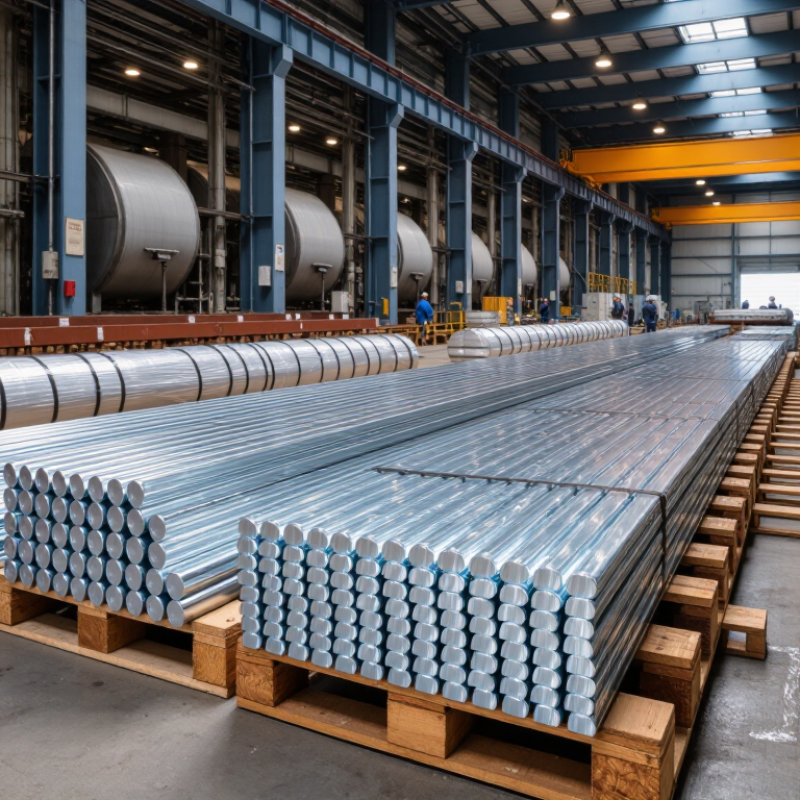
Hot-dip galvanized bars begin with steel that is cut, shaped, and carefully inspected. Workers remove oil, rust, and mill scale through degreasing, pickling, and rinsing. Fluxing follows. It helps molten zinc bond with the cleaned surface. Small contamination matters. Even a thin residue can create a bare patch.
The prepared bars enter a zinc bath near 450°C. Immersion time and withdrawal speed require close control. Zinc reacts with the steel and forms protective alloy layers. Excess zinc drains during withdrawal, while cooling stabilizes the coating. Threads, corners, and drilled areas need extra attention because zinc can collect there. Production is not perfectly uniform. Bar geometry, steel chemistry, and bath temperature can change the final thickness.
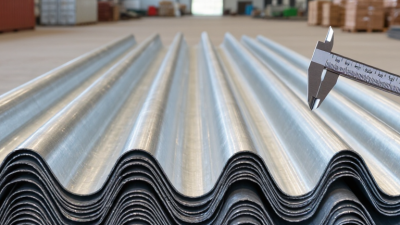
Evaluation combines appearance, measurement, and practical testing. Inspectors check for bare spots, blisters, sharp lumps, and uneven drainage marks. Magnetic gauges measure coating thickness at several locations, not just the easiest surface. Mass-per-area testing can support these readings. Adhesion tests help confirm that the coating will withstand normal handling. Dimensions and thread fit are also checked after galvanizing. Specifications such as ISO 1461 may guide acceptance, but project requirements still matter. A bright finish is not proof of quality. That detail is easy to miss. Records should identify bath conditions, inspection points, and test results. When readings vary, investigators should examine preparation and steel composition, rather than blaming measurement first.
Ranking global hot-dip galvanized bar manufacturers requires more than production volume. The central test is consistent performance across climates, projects, and delivery cycles. I would examine coating thickness, adhesion, surface uniformity, and dimensional accuracy. Samples should be tested against recognized international standards by qualified laboratories. A bright surface is not enough. Good appearance can hide weak process control. Manufacturer records should show bath temperature, immersion time, zinc chemistry, and inspection results. These details reveal whether quality is repeatable, not accidental.
A strong ranking also measures engineering experience. Companies should demonstrate work with structural bars, threaded components, reinforcement systems, and custom dimensions. Their technical teams need to explain pretreatment, venting, drainage, and distortion risks in practical language. Traceability matters. Each shipment should connect to heat numbers, inspection reports, and packing records. Delivery reliability deserves measurable evidence, including lead-time history, export documentation accuracy, and damage rates. Independent audits and transparent corrective actions strengthen credibility.
Environmental performance should be assessed without accepting vague promises. Useful evidence includes energy monitoring, zinc recovery, wastewater controls, and worker safety records. Capacity matters, but oversized facilities do not automatically produce better bars. Customer references can confirm consistency after installation, especially where salt, humidity, or freeze-thaw cycles are severe. No ranking is perfect. Weighting may favor documented quality over marketing, yet smaller producers may have stronger craftsmanship than their public data suggests. That weakness should remain visible when scores are published.
| Rank | Anonymous Manufacturer | Primary Market Region | Galvanizing Process | Typical Zinc Coating Range (µm) |
Relevant Standard Coverage |
Bar Diameter Capability (mm) |
Export Coverage | Composite Score / 100 |
|---|---|---|---|---|---|---|---|---|
| 1 | Manufacturer A | Western Europe | Continuous and batch hot-dip galvanizing | 45–150 | EN ISO 1461; ASTM A123/A153 | 6–80 | 50+ countries | 94 |
| 2 | Manufacturer B | North America | Batch hot-dip galvanizing | 50–180 | ASTM A123/A153; CSA G164 | 10–100 | 25+ countries | 92 |
| 3 | Manufacturer C | East Asia | Automated batch hot-dip galvanizing | 40–160 | ISO 1461; ASTM A123/A153; JIS H8641 | 8–90 | 40+ countries | 90 |
| 4 | Manufacturer D | Northern Europe | Batch hot-dip galvanizing with duplex finishing | 45–170 | EN ISO 1461; ISO 12944 | 6–75 | 30+ countries | 88 |
| 5 | Manufacturer E | South Asia | Batch hot-dip galvanizing | 40–150 | ISO 1461; ASTM A123/A153 | 8–85 | 20+ countries | 86 |
| 6 | Manufacturer F | Southeast Asia | Batch hot-dip galvanizing | 45–155 | ISO 1461; ASTM A123/A153; AS/NZS 4680 | 6–90 | 15+ countries | 84 |
| 7 | Manufacturer G | Central Europe | Batch hot-dip galvanizing | 40–145 | EN ISO 1461; ISO 9001 quality system | 6–70 | 18+ countries | 82 |
| 8 | Manufacturer H | Oceania | Batch hot-dip galvanizing | 50–160 | AS/NZS 4680; ISO 1461 | 8–80 | 10+ countries | 80 |
| 9 | Manufacturer I | Middle East | Batch hot-dip galvanizing with inspection services | 45–150 | ISO 1461; ASTM A123/A153 | 10–75 | 12+ countries | 78 |
| 10 | Manufacturer J | Latin America | Batch hot-dip galvanizing | 40–145 | ISO 1461; ASTM A123/A153 | 8–70 | 8+ countries | 76 |
The ten leading hot-dip galvanizing bar manufacturers differ more by capability than by reputation. One profile focuses on high-volume construction bars. Another serves bridge and transmission projects. A third specializes in small-batch, custom-dimension steel. Other leaders combine steelmaking, bar rolling, galvanizing, and export logistics under one roof. Several operate automated coating lines, while smaller specialists depend on careful manual inspection. Their strongest common feature is process control, not factory size.
World Steel Association reported about 1.89 billion tonnes of crude steel production in 2023. This scale supports steady demand for corrosion-resistant bars in infrastructure. However, production volume alone cannot prove quality. Buyers should examine zinc thickness records, bath-temperature controls, surface preparation, and batch traceability. ISO 1461 provides a useful reference for galvanized coating requirements. ASTM A123 is also widely consulted for structural steel products. A ranking can still mislead. Regional transport, repair support, and delivery consistency matter greatly.
Tips: Request recent inspection reports and sample coating measurements. Check whether the manufacturer tests adhesion after handling. Ask for a corrective-action record, not only a polished brochure. In practical evaluations, the weakest link is often documentation. Also compare bar straightness, cutting accuracy, and packaging protection. These details seem minor. They often decide site performance.
The top ten hot dip galvanizing bar manufacturers compete on quality, capacity, certifications, and market reach. Product quality begins with surface preparation, zinc purity, coating thickness, and bonding strength. Experienced plants control acid cleaning carefully, because poor preparation can create bare patches or uneven coatings. Buyers should request coating reports, bend-test results, and batch traceability.
Capacity also matters when projects require thousands of bars on fixed schedules. Leading producers often operate multiple galvanizing lines, automated hoists, and covered storage areas. A practical comparison should examine monthly output, bar length limits, diameter ranges, and delivery performance. Some facilities advertise large capacity but provide limited evidence. That deserves caution.
Certifications can strengthen trust, but certificates alone prove little. ISO 9001 supports process control, while ISO 14001 reflects environmental management. Product compliance may also involve ASTM, EN, or equivalent regional standards. The strongest manufacturers serve construction, power, transport, agricultural, and industrial markets across several regions. Export experience helps with packaging, customs documents, and corrosion expectations. However, rankings remain imperfect. Independent inspection, recent samples, and direct factory audits may reveal differences hidden by polished brochures.
Choosing among the top ten hot-dip galvanizing bar manufacturers requires more than comparing quotations. Start with verified production experience in your bar type, diameter range, and intended environment. Ask how the plant controls steel preparation, zinc bath temperature, withdrawal speed, and cooling. These details directly affect coating uniformity and adhesion. A capable manufacturer should provide recent test reports, coating-thickness readings, dimensional data, and batch traceability. Ask for proof.
Technical compliance should match your project specification, not a generic sales sheet. Confirm applicable standards, inspection methods, sampling frequency, and acceptable repair procedures. Request a small trial batch before placing a large order. Inspect its surface for bare spots, excessive zinc buildup, runs, and warped ends. Check whether threaded or cut areas receive suitable protection. Details matter. Also assess furnace capacity, monthly output, packaging, and realistic lead times. A low price means little if bars arrive mixed, damp, or poorly labeled.
Reliability becomes clearer through factory audits, customer references, and direct conversations with quality staff. Ask how nonconforming bars are isolated and how corrective actions are recorded. Review certificates from independent laboratories when corrosion performance is critical. Communication matters during design changes, too. In practice, no supplier is perfect; even strong plants may show occasional coating variation or delayed responses. That is why measurable controls matter more than polished promises. Choose the manufacturer that documents limits, explains risks plainly, and accepts inspection before shipment.
A reliable hot-dip galvanizing bar manufacturer should specify coating thickness according to the steel section thickness and comply with ISO 1461:2022. The chart compares the minimum average and minimum local zinc coating thickness requirements for fabricated steel products. When evaluating suppliers, confirm their inspection procedures, coating uniformity, certification, and ability to meet these baseline requirements.