Angle Bar sections may look alike on a warehouse rack, but their shape, production method, and steel grade affect where they perform best. This guide compares common types, including equal-leg and unequal-leg sections, hot-rolled and cold-formed bars, and carbon-steel and stainless-steel options. The categories overlap: a bar can be unequal-leg, hot-rolled, and stainless steel at the same time.
Engineering historian and civil engineer Henry Petroski wrote, “Science is about knowing; engineering is about doing.” That idea matters when selecting an Angle Bar. A drawing may show two legs meeting at a right angle, yet the actual choice depends on loads, connection details, exposure, and available dimensions. Picture a frame corner carrying a side load, or an outdoor bracket exposed to rain. Neither application should be specified by shape alone.
Details matter. Equal-leg bars have matching leg widths; unequal-leg bars do not. Hot-rolled and cold-formed products can differ in dimensions and surface characteristics, so check the supplier’s product data rather than assuming they are interchangeable. Material grade, thickness, length, and tolerances also deserve attention. There is no universal “best” type. A useful comparison starts with the job, then checks the section’s documented properties against the design requirements. Suppliers may group products differently, and that can make comparisons less tidy than expected. That uncertainty is worth acknowledging. The sections below explain the main types, their practical distinctions, and what to verify before choosing one.
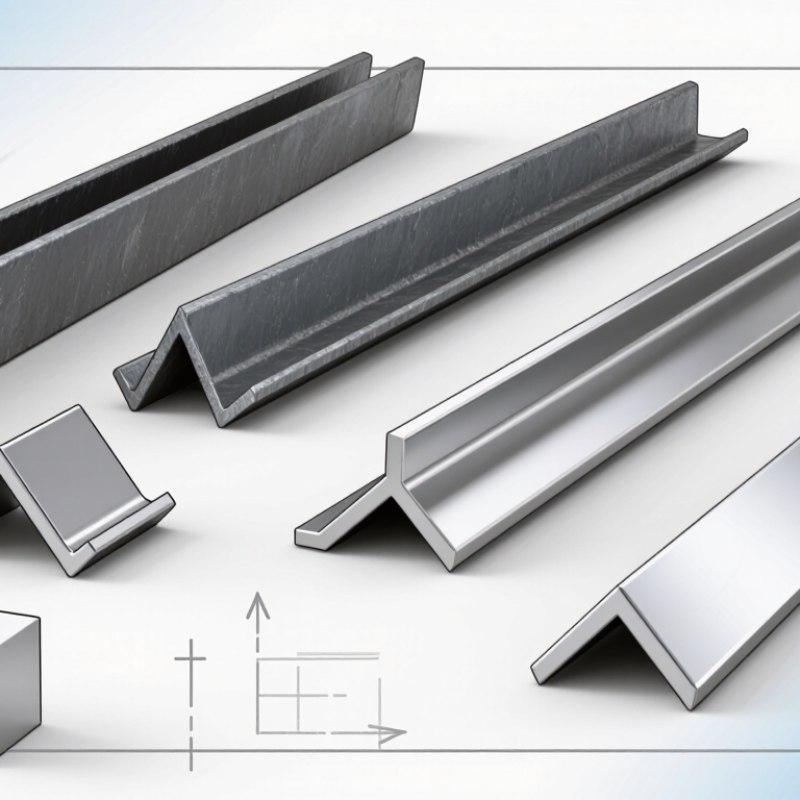
Equal-leg angle bars have two legs of identical length, meeting at a right angle. This balanced profile can simplify layouts where support is needed in two perpendicular directions. For example, an angle fixed along a frame corner can provide a practical seat for a plate or brace. Its shape looks symmetric. The load path may not be.
The AISC Steel Construction Manual provides section-property tables for angle shapes, helping engineers compare area, weight, and axis-related properties before specifying a section. Equal legs do not guarantee equal stresses: connection position, weld length, and load direction can introduce eccentricity. A small offset matters. World Steel Association’s World Steel in Figures 2025 reports 1,882.6 million tonnes of crude steel production worldwide in 2024; that figure describes the wider steel industry, not angle-bar output. On site, check leg dimensions and thickness against the drawings, then confirm fit at corners and bolt holes. I would not choose an angle by appearance alone; the connection detail can change how its apparently balanced shape performs.
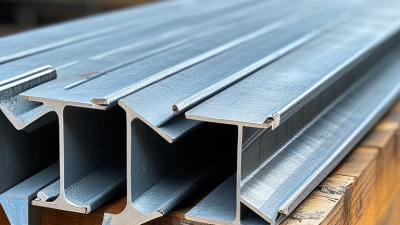
Unequal-leg angle bars have two flanges of different widths, making them useful when a project needs an L-shaped section without equal space on each side. The wider leg can provide a larger fastening surface, while the shorter leg fits into a tight corner or shallow channel. That matters. You may see them in equipment frames, edge supports, brackets, and repairs where surrounding parts limit clearance. For example, a 75 mm leg can sit against a panel while a 50 mm leg aligns with a narrow support.
Choosing a size takes more than matching the visible dimensions. Check the steel grade, thickness, load direction, connection method, and how the bar is supported. A long, unsupported span may behave differently from a short bracket fixed at several points. The wider flange does not automatically make the section stronger in every direction. That detail is easy to miss. I would also verify hole placement and corner clearance on a drawing or sample; real assemblies sometimes reveal a fit problem that looked harmless on screen. If the angle bar carries a structural load, confirm the design with a qualified engineer.
Tips: Measure both legs and thickness before ordering. Mark the intended load direction, then check whether bolts, welds, or nearby surfaces interfere with installation. Leave room for coatings and fabrication tolerances.
| Type | Typical material or finish | Illustrative unequal-leg sizes | Key characteristics | Common asymmetric applications |
|---|---|---|---|---|
| Hot-rolled structural unequal angle | Carbon structural steel; grades such as S275 or S355 are used in relevant product specifications. | 100 × 75 × 8 mm; 150 × 90 × 10 mm | The longer and shorter legs provide different reach and bearing widths. Section properties and availability depend on the specific size and standard. | Building connections, support brackets, frames, and edge supports where the two legs have different connection or bearing requirements. |
| Hot-dip galvanized unequal angle | Carbon steel with a zinc coating; hot-dip galvanizing is commonly specified to ISO 1461. | Common structural angle sizes can be galvanized; dimensions depend on the selected section and coating process. | The zinc coating helps protect steel from corrosion. Coating thickness and detailing should suit the exposure conditions. | Outdoor brackets, utility supports, agricultural structures, and exposed secondary steelwork with unequal attachment surfaces. |
| Stainless-steel unequal angle | Stainless grades such as 304 or 316, selected according to the environment and specification. | Examples may include 75 × 50 × 6 mm; confirm mill or fabricator availability. | Offers corrosion resistance, with performance depending on grade, surface condition, and exposure. It is not a direct strength-for-strength substitute for carbon steel. | Food-processing equipment, marine-adjacent fittings, chemical facilities, and architectural supports requiring corrosion-resistant material. |
| Aluminum unequal angle | Common extrusion alloys include 6061 and 6063; temper and availability vary by product. | Extruded unequal-leg sizes vary by supplier and section design. | Low density and natural oxide formation make aluminum useful where weight and corrosion behavior matter; design values differ from steel. | Lightweight equipment frames, vehicle or enclosure trim, and non-steel supports with offset mounting surfaces. |
| Fabricated bent-plate unequal angle | Carbon steel, stainless steel, or other sheet and plate materials specified for the project. | Custom leg widths and thicknesses; dimensions are set by the design and fabrication process. | Made by forming plate, allowing nonstandard proportions or features. Strength and bend limits depend on material, thickness, and fabrication details. | Equipment-specific brackets, cladding supports, retrofit parts, and assemblies needing a tailored leg ratio or mounting geometry. |
| Perforated or slotted unequal angle | Usually formed or fabricated steel; finishes may include painted, galvanized, or other specified coatings. | Leg proportions, slot pattern, and length vary by system or custom design. | Slots or holes allow adjustable fastening and positioning. Openings reduce the net section and must be considered in design. | Adjustable shelving, service supports, light-duty frames, and installations where attachment points need flexibility. |
Sizes shown are illustrative examples, not a guarantee of standard stock. Confirm dimensions, material grade, section properties, finish, and design capacity against the applicable product specification and project requirements.
Carbon steel angle bars are practical for general construction because their two legs form a stiff, easy-to-connect corner. Equal-leg angles suit square frames and bracing; unequal-leg angles help when one connection needs a longer bearing surface. They appear in roof trusses, equipment supports, shelving, and light structural frames. Small details matter. Hole position, weld access, and corrosion protection can affect performance as much as the section size.
Material selection should follow the actual load, span, and exposure—not appearance alone. The World Steel Association’s World Steel in Figures 2024 reports 1,888.2 million tonnes of crude steel production worldwide in 2023, showing the scale of the steel supply base, though availability varies by region. For a common structural reference, ASTM A36 steel has a specified minimum yield strength of 36 ksi (250 MPa) for applicable products. Check the mill certificate and applicable specification; a familiar grade name is not a substitute for verification. An angle can twist or buckle if it is poorly braced. That detail is easy to underestimate.
Tips: Measure both legs and thickness. For outdoor use, plan a suitable coating and inspect cut edges. Confirm connections and loads with a qualified engineer.
Example equal-leg and unequal-leg sections compared by estimated theoretical mass per metre.
Equal-leg angles have legs of the same length; unequal-leg angles have legs of different lengths. Estimates use nominal dimensions and a steel density of 7,850 kg/m³, with corner radii ignored. Actual section mass can vary by product standard and manufacturer.
Stainless steel and aluminum angle bars share an L-shaped profile, but they suit different demands. Stainless steel is often chosen where moisture, frequent cleaning, or a durable finish matters. Grade 304 works for many indoor and general-purpose settings; grade 316 offers better resistance to chlorides, such as those near saltwater. Neither grade is immune to corrosion in every environment. Check the exposure, surface finish, and maintenance plan before specifying one.
Aluminum angle bars weigh less and are easier to cut and handle, making them useful for frames, trim, brackets, and non-heavy structural supports. They also resist corrosion through a natural oxide layer, though harsh chemicals or contact with dissimilar metals can cause problems. Details matter. Compare leg dimensions, thickness, temper, and load direction—not just the material name. A lightweight section is not automatically the right choice. For a support carrying substantial weight, confirm capacity with reliable engineering data rather than guessing from appearance. Stainless can be overkill in a dry interior, while aluminum may flex where a stiffer section is needed. That trade-off is easy to overlook.
Choosing an angle bar starts with the job’s load and layout, not just its shape. Equal-leg angles have matching sides and suit frames where support is needed in both directions. Unequal-leg angles provide a longer side for brackets or connections with limited space. Measure the available clearance before selecting dimensions; a bar that looks suitable on paper can obstruct a nearby panel or bolt.
Material matters too. Carbon steel is common for indoor structural work, while galvanized or stainless steel may better resist moisture and corrosive conditions. Check the specified grade, thickness, and finish against the design requirements. For a loaded frame, confirm how the angle will be oriented and fastened. A small change in leg position can affect stiffness. If calculations or drawings are unclear, ask a qualified engineer rather than guessing from appearance.
Tips: Match the bar to the environment and connection details. Bring the drawing and measurements when ordering. Check for straight edges, consistent thickness, and a sound finish on delivery. I have seen a “close enough” size create awkward drilling later, so allow time to verify the fit before cutting.