What Are the Best Square Steel Beam Types in 2026?
Choosing the best Square Steel Beam in 2026 starts with the job it must perform. A compact hollow section may suit a canopy post, while a heavier welded box beam can better fit demanding spans or unusual connection layouts. Neither is automatically the stronger choice. Span, load, wall thickness, steel grade, and support conditions all change the answer.
Theodore von Kármán, an influential engineer, observed, “Scientists study the world as it is; engineers create the world that has never been.” His words offer a useful lens for beam selection: design needs evidence, not guesswork. Compare hot-formed and cold-formed hollow sections, welded box sections, and available corrosion-resistant finishes. Check section dimensions, fabrication quality, connection details, and supplier documentation. Small details matter.
A practical comparison should also consider deflection, local buckling, corrosion exposure, fire requirements, and installation access. A beam that looks adequate on paper may become difficult to connect or protect on site. There is no universal winner. Product availability and current specifications can vary by market, so confirm them before design decisions are finalized. This guide will explain the main beam types, their strengths and limitations, and the questions to raise with a qualified structural engineer. Use it as a starting point, not a substitute for project-specific calculations. One honest caveat: “best” can be less tidy than a product table suggests.
What Defines a Square Steel Beam and How Is It Made?
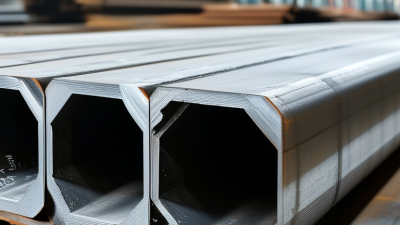
A square steel beam usually refers to a square hollow section, or SHS: a steel profile with four flat sides and a hollow center. The cavity reduces weight while providing useful strength in multiple directions. It is not the same as a solid square bar, which contains steel throughout and is often used for different purposes. The terminology can be confusing. Check the product drawing before comparing dimensions.
Most SHS begins as a flat steel strip or coil. Rollers gradually bend it into a tube, then its edges are joined along a longitudinal seam by welding. Further forming shapes the tube into a square, and sizing equipment checks its width and corner geometry. The section is cut to length and inspected for dimensions, surface defects, and weld consistency. Some products are formed cold; others use hot-forming processes, which can affect properties and finish.
Details matter. Wall thickness, steel grade, corner radius, and manufacturing tolerances all influence how a beam performs. A thick-looking section is not automatically suitable for every load or connection. Engineers typically verify the design against the intended span, supports, and load conditions, then confirm that the supplied dimensions match the specification. Even a small mismatch can complicate fitting on site.
Which Square Steel Beam Types Are Available in 2026?
In 2026, square steel beam options generally include square hollow sections, often called structural square tubing, and solid square bars. Hollow sections have four flat faces and a central void, giving useful bending strength without the weight of a solid section. They suit frames, supports, and columns when dimensions and wall thickness match the design loads. Solid bars are heavier and are more often used for compact supports, machined parts, or details needing a full cross-section. That distinction matters.
Hollow sections may be cold-formed or hot-formed, with many standard products made from welded steel strip. Seamless square sections are also available in some markets, though selection can be more limited. Buyers can compare carbon-steel grades, specified yield strength, outside dimensions, and wall thickness; corrosion protection, such as galvanizing, is a separate choice. Not always. A thicker wall does not automatically make one beam the better option. Span, connections, load direction, and local buckling all affect performance, so a qualified engineer should check the member before use. Stock sizes vary by supplier and region, and published dimensions may not match the actual measured corner radii. Read the product specification carefully.
Which Square Steel Beam Types Are Available in 2026?
Common square hollow-section (SHS/HSS) size options, compared by estimated mass per metre.
The chart shows illustrative nominal sizes, from 50 × 50 × 3 mm to 200 × 200 × 8 mm. Masses are theoretical estimates calculated from the dimensions using a steel density of 7,850 kg/m³; corner radii and manufacturing tolerances are excluded. Actual availability and published section weights vary by region and specification. Choose a section based on design loads, steel grade, connection details, and applicable structural standards.
How Do Strength, Grade, and Dimensions Affect Performance?
A square steel beam’s performance depends on more than its outside width. A 100 mm square section with a 6 mm wall behaves differently from one with a 3 mm wall, even when both look similar on a drawing. Thicker walls usually improve resistance to bending and local buckling, but they also add weight and may increase fabrication costs. Small details matter.
Steel grade affects yield strength, or the stress level at which the material begins to deform permanently. A higher grade can support greater loads, but it does not automatically make every beam safer. Span, load direction, support conditions, and connection design all influence performance. For example, a long beam carrying a concentrated load near its center may deflect noticeably, even if its steel grade is high.
Strength is not stiffness.
Dimensions should be checked against the actual use, not selected by appearance. Square hollow sections can resist twisting well, yet slender walls may buckle near a welded connection or under a heavy point load. A thicker section is not always the best fix; sometimes the span or support layout deserves another look. Verify section properties and material certificates, then have a qualified engineer assess the load case. Real structures are less tidy than tables.
How Should You Compare Cost, Durability, and Compliance?
Comparing square steel beams in 2026 means looking beyond the purchase price. Hot-rolled square hollow sections are common for frames, while welded box sections can suit projects with specific dimensions. Compare wall thickness, steel grade, length, and fabrication needs on the same basis. A cheaper section may require extra cutting, welding, or corrosion protection. Look closer.
Durability depends on exposure and maintenance, not shape alone. For a damp outdoor site, ask whether the coating suits the environment and how damaged areas will be repaired. Check the beam’s load capacity with a qualified structural engineer; appearance cannot reveal hidden design limits. Small detail. Big consequence. Compliance also varies by location and project. Request current material test reports, grade identification, and traceable documentation, then confirm the required design standard and inspection records with the project team. A certificate helps, but it does not prove that a beam is suitable for every span or connection. One point is easy to miss: delivery tolerances and lead times can affect installation cost. Compare the full specification, not just the quoted price.